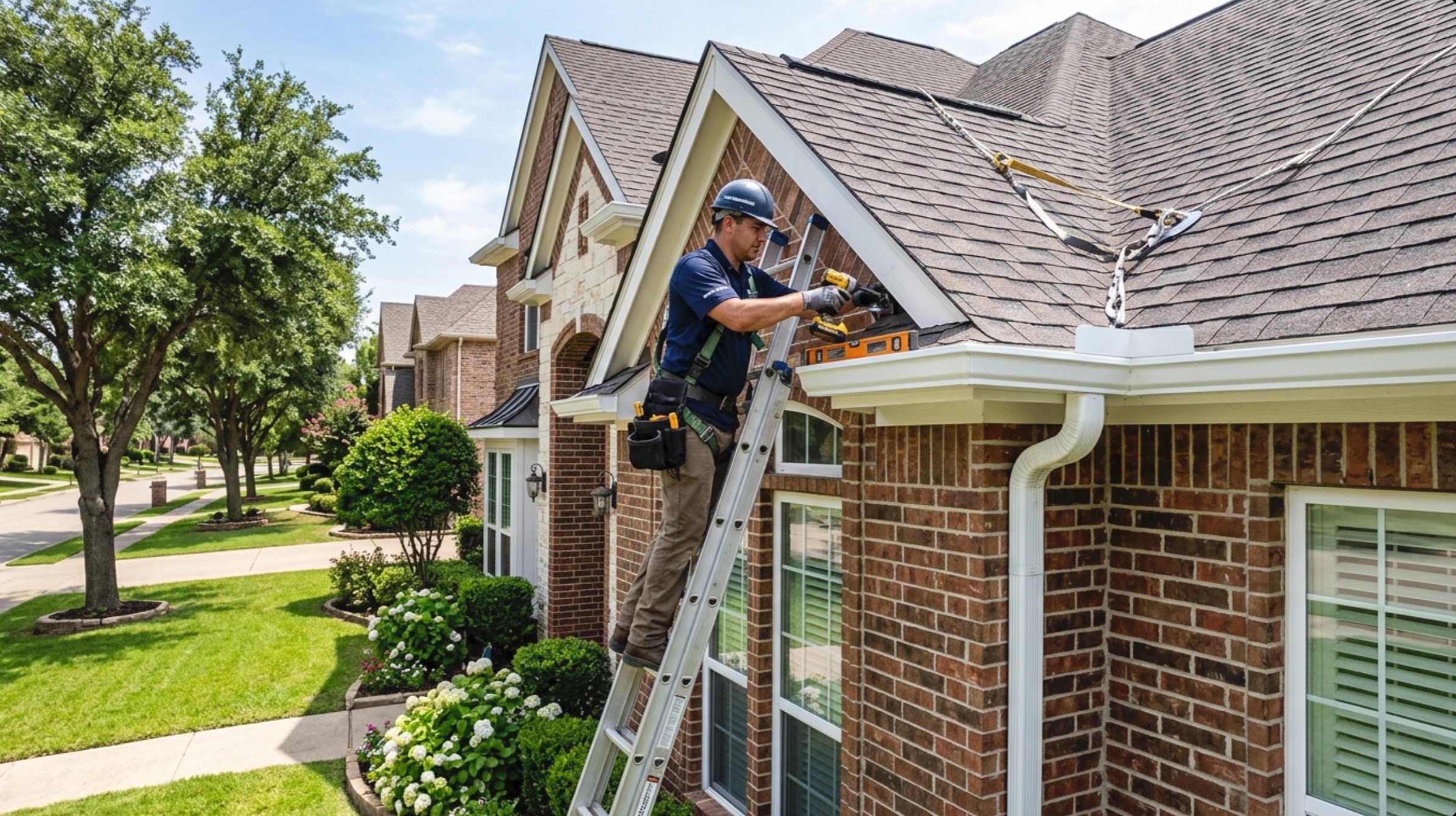
Author: chrisp

Overflowing and Clogged Gutters: Causes, Fixes, and When to Call a Pro

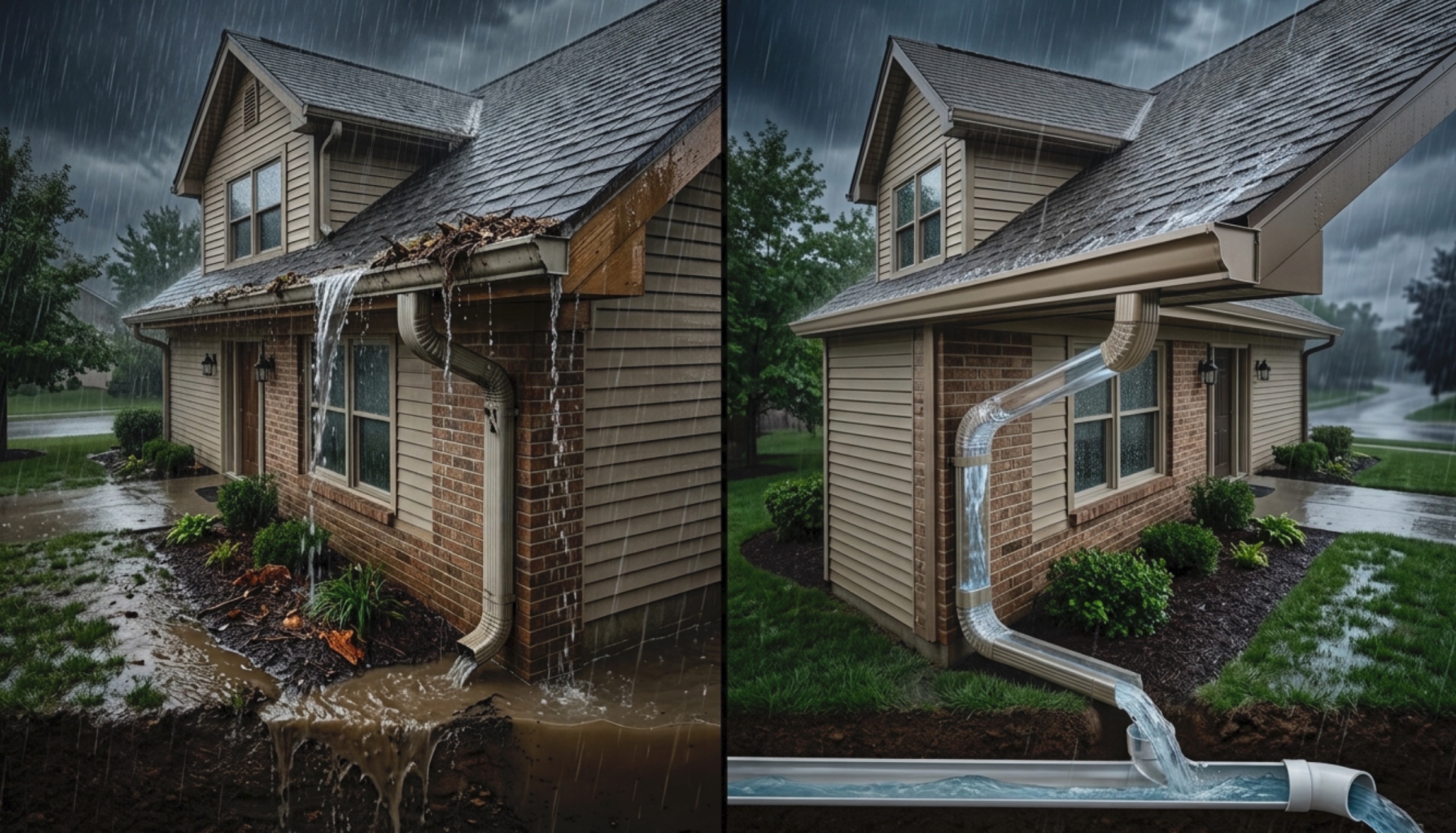
Overflowing gutters are more than an inconvenience during a rainstorm. When water spills over the front, runs behind the gutter, or pours onto the ground beside your home, the system is no longer directing roof runoff where it needs to go.

A clogged gutter is one of the most common causes, but it is not the only possibility. Gutters may also overflow because the downspouts are blocked, the system is incorrectly pitched, the gutters are too small, or a large roof valley is sending more water into one section than it can handle.

Understanding what causes gutters to overflow is important because cleaning the system will not solve every problem. If the gutters are undersized or poorly installed, the water may continue spilling over even after every leaf has been removed.

The Brothers that just do Gutters of North Dallas provides professional gutter cleaning, inspection, repair, replacement, and drainage services. Our team will identify why the system is overflowing and recommend an appropriate solution for your home.

Call (469) 846-9166 to schedule a free inspection and estimate.

Why Are My Gutters Overflowing?

Gutters overflow when water enters the system faster than it can move through the gutters and downspouts.

The most common causes include:

  • Leaves and debris inside the gutters
  • Clogged downspouts
  • Blocked gutter outlets
  • Gutters that are too small
  • Too few downspouts
  • Incorrect gutter slope
  • Sagging gutter sections
  • Roof valleys concentrating water
  • Gutters installed too low
  • Damaged or bent gutters
  • Gutter guards covered with debris
  • Underground drainage blockages
  • Heavy rainfall overwhelming a poorly designed system

The location of the overflow can help identify the likely cause.

For example:

  • Overflow near a downspout may indicate a blocked outlet or downspout.
  • Overflow in the middle of a run may indicate sagging or poor slope.
  • Overflow below a roof valley may indicate too much water entering one spot.
  • Overflow along the full length may indicate undersized gutters or a widespread clog.
  • Water running behind the gutter may indicate incorrect placement, loose gutters, or a drip-edge problem.

How a Gutter System Is Supposed to Work

A gutter system has a simple purpose: collect rainwater from the roof and move it away from the home.

The process works like this:

  1. Rain falls onto the roof.
  2. The roof directs water toward the gutter.
  3. The gutter carries water toward an outlet.
  4. The outlet sends water into a downspout.
  5. The downspout moves it toward the ground.
  6. An extension, splash block, or drainage system carries it away from the foundation.

A failure at any point can cause water overflowing gutters.

Even a clean gutter may not work properly if the downspout is too small, the outlet is blocked, or the water is discharged into a clogged underground drain.

What Causes Gutters to Overflow?

The following are the most common reasons homeowners see water spilling over the system.

1. Leaves and Debris

Leaves are the most recognizable source of clogs, but gutters collect much more than foliage.

Common debris includes:

  • Twigs
  • Seeds
  • Dirt
  • Pollen
  • Pine needles
  • Asphalt shingle granules
  • Bird nesting material
  • Insects
  • Mud
  • Small branches

Debris can form a dense layer along the bottom of the gutter. When it mixes with rainwater, it may become heavy and difficult to remove.

The material may also move toward the outlet and create a blockage that stops water from entering the downspout.

2. Clogged Downspouts

A gutter may look clean from above while the downspout remains blocked.

A downspout clog may occur:

  • At the top outlet
  • Inside an elbow
  • In a vertical section
  • At the bottom opening
  • Where the downspout enters an underground drain

Signs of a clogged downspout include:

  • Water overflowing near the outlet
  • Little or no water leaving the bottom
  • Water leaking from downspout joints
  • A gutter filling rapidly during rain
  • Debris packed into the top opening
  • Water backing up from an underground connection

Cleaning the gutter without clearing the downspout may leave the system unable to drain.

3. Gutters That Are Too Small

Not every overflowing gutter is clogged.

A system may be clean but too small to handle the amount of water coming off the roof.

Five-inch gutters work for many homes, but larger or steeper roofs may require 6-inch gutters. Some very large properties may need a 7-inch system.

Larger gutters may be appropriate when a home has:

  • A large roof area
  • A steep roof pitch
  • Long gutter runs
  • Major roof valleys
  • Recurring overflow
  • Heavy water concentration
  • A system that already has clean and functional downspouts

A steep roof sends water toward the gutter with more speed and force. If the gutter does not have enough capacity, water may shoot over the front.

4. Too Few Downspouts

The gutter may have enough capacity, but the system still needs enough outlets and downspouts to remove the water.

A long gutter run with only one small downspout may drain too slowly during heavy rain.

Adding another downspout may help when:

  • Water backs up far from the existing outlet
  • The gutter run is unusually long
  • A large roof section drains into one area
  • The existing downspout is undersized
  • Overflow continues despite regular cleaning

The number and size of downspouts should be planned based on roof area, gutter size, rainfall, and system layout.

5. Incorrect Gutter Slope

Gutters need a slight slope toward the downspouts.

If the slope is too flat, water may move slowly or remain inside the gutter. If the gutter slopes away from the outlet, water may collect at the wrong end.

Improper slope can cause:

  • Standing water
  • Debris accumulation
  • Overflow
  • Sagging
  • Seam leaks
  • Loose hangers
  • Mosquito activity
  • Premature wear

A professional may be able to reposition the gutter and restore the slope if the material and fascia remain in good condition.

6. Sagging Gutters

A sag creates a low area where water and debris collect.

The gutter may sag because of:

  • Failed hangers
  • Wet debris
  • Standing water
  • Rotted fascia
  • Poor hanger spacing
  • Incorrect installation
  • Storm damage

The more water that collects in the low point, the heavier the gutter becomes. This can worsen the sag and eventually cause it to pull away from the house.

7. Roof Valleys

A roof valley is where two roof slopes meet.

Valleys can direct a large amount of water into a small section of gutter. During a North Texas downpour, the water may enter with enough speed to overshoot or overwhelm the system.

Possible solutions may include:

  • Larger gutters
  • A splash guard
  • Additional downspout capacity
  • Repositioning the gutter
  • Adjusting the drainage design
  • Repairing an incorrectly installed system

A splash guard may help in certain locations, but it should not be used to hide a capacity or installation problem.

8. Gutters Installed Too Low

The roof edge should direct water into the gutter.

If the gutter is mounted too low or too far away from the roof, fast-moving rainwater may miss the system and flow over the front or behind it.

This can happen because of:

  • Incorrect installation
  • Loose hangers
  • Damaged fascia
  • A gutter that has shifted
  • Poor roof-edge alignment

The gutter may need to be repositioned rather than cleaned.

9. Bent or Damaged Gutters

A dent, twist, or crushed section may restrict water flow.

The damaged area can trap debris, create a low point, or reduce the gutter’s capacity.

Minor isolated damage may be repairable. Long or severely deformed sections may need replacement.

10. Gutter Guard Buildup

Gutter guards help reduce debris entering the system, but debris can still collect on top.

Leaves and organic material may cover the screen and prevent rainwater from passing through effectively.

Gutter guards may need periodic inspection and surface cleaning, especially on heavily wooded properties.

No gutter guard makes a system completely maintenance-free.

11. Blocked Underground Drainage

Some downspouts connect to underground pipes.

When the underground system is clogged, water may back up into the downspout and gutter.

Possible signs include:

  • Water rising around the underground connection
  • Overflow near the downspout
  • Slow drainage
  • Wet soil that does not dry
  • Water appearing away from the intended outlet
  • Recurring problems after above-ground cleaning

The underground drainage system may need inspection or cleaning.

Why Overflowing Gutters Are Dangerous

Water spilling over a gutter repeatedly lands in areas the system is supposed to protect.

This may contribute to:

  • Fascia rot
  • Roof-edge damage
  • Rafter damage
  • Siding stains
  • Peeling paint
  • Mold and mildew
  • Landscape erosion
  • Soil displacement
  • Foundation pooling
  • Foundation instability
  • Crawlspace moisture
  • Basement water
  • Slippery walkways
  • Pest activity

Overflowing gutters can also become heavy enough to loosen hangers and pull away from the house.

The sooner the source is corrected, the lower the risk of secondary damage.

How to Clean a Clogged Gutter

Homeowners searching for how to clean a clogged gutter should begin by considering safety.

Gutter cleaning often requires ladder work near the roof edge. The risk increases on:

  • Two-story homes
  • Steep or uneven ground
  • Tall rooflines
  • Wet surfaces
  • Areas near electrical lines
  • Homes with limited ladder access
  • Gutters above pools, patios, or landscaping

A homeowner should not attempt cleaning if the area cannot be accessed safely.

Basic Gutter Cleaning Process

For a low, accessible system, the general process includes:

  1. Choose a dry day.
  2. Use a stable ladder on level ground.
  3. Wear gloves and eye protection.
  4. Remove large debris by hand or with a gutter scoop.
  5. Place debris in a container rather than dropping it onto landscaping.
  6. Clear the outlet above the downspout.
  7. Flush the gutter carefully with water.
  8. Confirm that water exits the downspout.
  9. Inspect for standing water and leaks.
  10. Clean the surrounding property.

Never lean too far from the ladder. Move it regularly rather than stretching to reach another section.

Do not place excessive pressure on the gutter itself because the front lip is not designed to support a person’s weight.

How to Clear a Clogged Downspout

A downspout blockage may require more than flushing water from the top.

A basic process may involve:

  • Removing debris from the outlet
  • Disconnecting the lower elbow when accessible
  • Checking each joint
  • Using water to identify the blockage
  • Clearing compacted material carefully
  • Reassembling loose sections
  • Confirming full water flow

Do not use excessive force that could separate joints or damage thin metal.

If the downspout connects to underground drainage, the clog may be beyond the visible system and require professional equipment or service.

Can You Clean Gutters From the Ground?

Ground-based gutter cleaning tools may help with limited debris.

Options include:

  • Extension poles
  • Curved gutter-cleaning attachments
  • Blower attachments
  • Vacuum systems
  • High-reach tools

These tools may be useful when debris is loose and the gutter is accessible from below.

However, cleaning from the ground has limitations:

  • You may not see compacted debris.
  • Downspout clogs may remain.
  • Water-flow problems may be missed.
  • Damaged seams and hangers may not be visible.
  • High-pressure water can create a mess or damage components.
  • Tools may push debris into the downspout.

Professional cleaning provides a closer inspection of the system and confirmation that both gutters and downspouts are functioning.

Should You Use a Pressure Washer?

Using a pressure washer on gutters can create problems.

High-pressure water may:

  • Damage sealant
  • Separate joints
  • Strip paint
  • Force water behind the fascia
  • Damage roofing materials
  • Scatter dirty debris
  • Create unsafe ladder conditions

A controlled water flow is generally safer for testing drainage after debris has been removed.

Why Cleaning Does Not Always Fix Overflow

If the gutter is clear but still overflowing, the problem may involve:

  • Incorrect sizing
  • Poor slope
  • A large roof valley
  • Too few downspouts
  • A blocked underground drain
  • Gutter placement
  • A bent section
  • A roof-edge issue

Repeatedly cleaning a system that is fundamentally undersized or incorrectly installed will not solve the overflow.

A professional evaluation can determine whether the home needs a repair, larger gutters, more downspouts, or replacement.

Professional Gutter Cleaning

The Brothers that just do Gutters of North Dallas provides comprehensive gutter cleaning rather than basic debris removal.

The service includes:

  • Inspection of the gutter system
  • Full gutter cleaning
  • Downspout cleaning
  • Before-and-after photo documentation
  • Property cleanup
  • Recommendations for needed repairs
  • Optional recurring maintenance

Gutter cleaning services start at a $450 minimum.

This reflects the full service, trained team, inspection, documentation, cleanup, and gutter-specific expertise included in the appointment.

How Often Should Gutters Be Cleaned?

The Brothers that just do Gutters generally recommend cleaning and maintenance approximately twice per year.

The proper frequency depends on:

  • Tree coverage
  • Type of trees
  • Roof material
  • Roof pitch
  • Gutter size
  • Gutter guards
  • Previous clogging
  • Nearby construction
  • Weather exposure

Some homes may require service four times per year.

Oak trees, crape myrtles, pine needles, seeds, and roof granules can create recurring debris problems.

The company offers recurring gutter cleaning and maintenance options based on the needs of the property.

What Does Gutter Maintenance Include?

A maintenance visit may include the same core services as professional cleaning:

  • Gutter inspection
  • Debris removal
  • Downspout cleaning
  • Photo documentation
  • Cleanup
  • Repair recommendations

Recurring maintenance helps identify loose hangers, leaks, corrosion, and drainage problems before they become larger repairs.

Do Gutter Guards Prevent Clogs?

Gutter guards can significantly reduce the amount of debris entering the system.

They may be valuable for homes with:

  • Heavy tree coverage
  • Recurring clogs
  • Difficult-to-reach gutters
  • Multiple stories
  • Asphalt shingle granules
  • Oak trees
  • Crape myrtles
  • Frequent maintenance needs

The Brothers that just do Gutters offers BroGuard, a gutter protection system featuring a heavy-gauge aluminum frame and stainless steel micro mesh.

BroGuard helps block:

  • Leaves
  • Seeds
  • Pine needles
  • Pollen
  • Dirt
  • Shingle granules
  • Small debris

Gutter guards do not correct undersized gutters, poor slope, damaged fascia, or inadequate downspouts. The existing system should be evaluated first.

When Overflow Requires Gutter Repair

Cleaning may reveal that the gutter needs repair.

Common repair needs include:

  • Replacing failed hangers
  • Correcting slope
  • Reattaching loose sections
  • Repairing damaged fascia
  • Replacing a bent section
  • Adding a downspout
  • Reconnecting downspout joints
  • Correcting a loose outlet
  • Improving discharge away from the home
  • Repairing underground drainage

The repair should address the underlying water-flow problem rather than only the visible overflow.

When Gutter Replacement Is the Better Option

Replacement may make more sense when:

  • The gutters are too small
  • Overflow occurs throughout the system
  • The original installation is poor
  • Several runs sag or pull away
  • The gutters are badly bent
  • Multiple seams leak
  • The fascia is extensively damaged
  • There are too few downspouts
  • Previous repairs continue to fail
  • The system cannot handle the roof’s water volume

Large or steep roofs often benefit from 6-inch gutters. Some very large properties may need 7-inch gutters.

A properly sized replacement system may provide a better long-term result than repeatedly repairing an inadequate system.

When to Call a Professional

Contact a gutter professional when:

  • The gutters are above the first story.
  • You cannot place a ladder safely.
  • Overflow continues after cleaning.
  • Water leaks behind the gutter.
  • The gutter is sagging or pulling away.
  • The downspout is blocked underground.
  • The fascia appears soft or rotten.
  • The system overflows below roof valleys.
  • You suspect the gutters are too small.
  • Several parts of the system are damaged.
  • You need recurring maintenance.
  • You want gutter guards installed.
  • You are unsure whether repair or replacement is appropriate.

The Brothers that just do Gutters do not provide emergency gutter repair services. If water is actively entering the home, electrical equipment is exposed, or a gutter is falling and creating an immediate hazard, contact the appropriate emergency restoration, electrical, roofing, or urgent exterior service provider.

What to Expect During an Inspection

The Brothers that just do Gutters of North Dallas provides free on-site inspections and estimates.

A local Solutionist® will walk around the property with you and ask about:

  • Where the overflow occurs
  • How long the problem has existed
  • Whether the gutters have been cleaned
  • Where water pools
  • Whether the problem happens during every rain
  • Previous repair attempts
  • Concerns about the fascia or foundation

The initial evaluation is performed from the ground.

The representative may evaluate:

  • Gutter size
  • Roof pitch
  • Number of stories
  • Roof valleys
  • Gutter slope
  • Visible debris
  • Downspout locations
  • Property access
  • Fascia condition
  • Foundation drainage

The company can then recommend cleaning, repair, additional downspouts, gutter guards, drainage work, or replacement.

How Much Does It Cost to Fix Overflowing Gutters?

The cost depends on the cause.

Possible services may include:

  • Professional gutter cleaning
  • Downspout clearing
  • Hanger replacement
  • Slope correction
  • Fascia repair
  • Additional downspouts
  • Underground drainage work
  • Partial gutter repair
  • Complete replacement
  • Gutter guard installation

The Brothers that just do Gutters do not publish one universal repair price because each system requires a property-specific evaluation.

Professional gutter cleaning begins at a $450 minimum, while repair or replacement pricing is provided through a free estimate.

Local Gutter Service in North Dallas

The Brothers that just do Gutters serves homeowners and properties throughout communities including:

  • North Dallas
  • Dallas
  • Plano
  • Richardson
  • Allen
  • Frisco
  • McKinney
  • Carrollton
  • Prosper
  • The Colony
  • Highland Park
  • Lakewood
  • Murphy
  • Parker
  • Flower Mound

Services include:

  • Gutter cleaning
  • Gutter repair
  • Downspout repair
  • Gutter installation
  • Gutter replacement
  • Gutter guards
  • Fascia repair
  • Underground drainage
  • Recurring maintenance
  • Commercial gutter services
  • HOA and multifamily services

Schedule a Free Gutter Inspection

Do not wait for overflowing gutters to damage your fascia, landscaping, or foundation.

The Brothers that just do Gutters of North Dallas will inspect the system, identify why it is overflowing, and explain the most appropriate solution.

Call (469) 846-9166 or complete the online estimate form to schedule your free inspection.

Conclusion

Overflowing gutters are commonly caused by leaves, debris, blocked downspouts, poor slope, sagging sections, undersized gutters, or insufficient drainage capacity.

Cleaning a clogged gutter may restore proper flow when debris is the only issue. However, overflow that continues after cleaning often indicates a design, sizing, installation, or drainage problem.

Ignoring water overflowing gutters can lead to fascia rot, soil erosion, siding damage, foundation pooling, and moisture problems.

The Brothers that just do Gutters of North Dallas provides professional gutter cleaning, repair, gutter guards, drainage services, and complete replacement when necessary.

Call (469) 846-9166 today to request a free on-site inspection and estimate.

Frequently Asked Questions

What causes gutters to overflow?

The most common causes are debris, clogged downspouts, improper slope, sagging gutters, undersized systems, too few downspouts, large roof valleys, and blocked underground drainage.

How do I know if my gutter is clogged?

Signs include standing water, visible debris, overflow near an outlet, little water leaving the downspout, and water spilling over during moderate rain.

How do you clean a clogged gutter?

Remove debris safely, clear the outlet, check the downspout, flush the system with controlled water, and confirm that water reaches the discharge point.

Can I clean my gutters from the ground?

Ground tools may remove limited loose debris, but they may not clear compacted material or downspout clogs. They also make it harder to inspect for damage.

Can a clogged downspout cause gutter overflow?

Yes. A blocked downspout prevents water from leaving the gutter, causing the system to fill and spill over.

Why are my gutters overflowing when they are clean?

The gutters may be too small, improperly pitched, sagging, mounted too low, connected to too few downspouts, or overwhelmed by a roof valley.

Why do my gutters overflow only during heavy rain?

The system may not have enough capacity for the roof area or rainfall. Larger gutters or additional downspouts may be needed.

Can 5-inch gutters be too small?

Yes. Large roofs, steep slopes, long runs, and major valleys may require 6-inch or even 7-inch gutters.

Will adding a downspout stop overflow?

It may help when the existing gutter has insufficient outlet capacity. The entire system should be evaluated first.

Why does water overflow in the middle of the gutter?

The gutter may be sagging, incorrectly pitched, or blocked in that area.

Why does water overflow behind my gutter?

The gutter may be clogged, loose, improperly placed, too low, or affected by drip-edge or roof-alignment problems.

Can overflowing gutters damage fascia?

Yes. Water can soak the wood behind the gutter, leading to rot, loose fasteners, and roof-edge damage.

Can overflowing gutters damage a foundation?

Yes. Repeated water discharge beside the house can erode soil and contribute to foundation moisture and instability.

How often should gutters be cleaned?

The Brothers that just do Gutters generally recommend approximately twice-per-year maintenance. Heavily wooded properties may need more frequent cleaning.

How much does professional gutter cleaning cost?

Professional cleaning services from The Brothers that just do Gutters of North Dallas begin at a $450 minimum.

What is included in professional gutter cleaning?

The service includes gutter inspection, complete gutter and downspout cleaning, before-and-after photos, property cleanup, and recommendations.

Will gutter guards prevent every clog?

No system eliminates all maintenance, but a quality micro-mesh guard can reduce the amount of debris entering the gutter.

Can gutter guards cause overflow?

Debris may collect on top of the guard and restrict water entry. Overflow can also occur if the underlying system is undersized or installed incorrectly.

Should gutters be repaired or replaced if they overflow?

Repair may be appropriate for a clog, failed hanger, poor slope, or inadequate downspout. Replacement may be better for undersized, badly damaged, or incorrectly installed systems.

Do the Brothers that just do Gutters offer emergency service?

No. The company does not provide emergency gutter repair services.

How quickly can I schedule an inspection?

An estimate may often be scheduled within a few days, although availability may occasionally extend to approximately one week.

Do The Brothers that just do Gutters offer recurring cleaning?

Yes. Recurring maintenance may be scheduled two or four times per year, depending on the property.

Do you clean commercial gutters?

Yes. The company works with homeowners, businesses, HOAs, apartments, and multifamily properties.

Do you repair underground gutter drainage?

Yes. Underground gutter drainage services are available when a buried system is contributing to backup or overflow.

How do I schedule a free inspection?

Call The Brothers that just do Gutters of North Dallas at (469) 846-9166 or submit the online estimate request form.
Gutter and Downspout Repair: Common Damage, Costs, and Professional Solutions

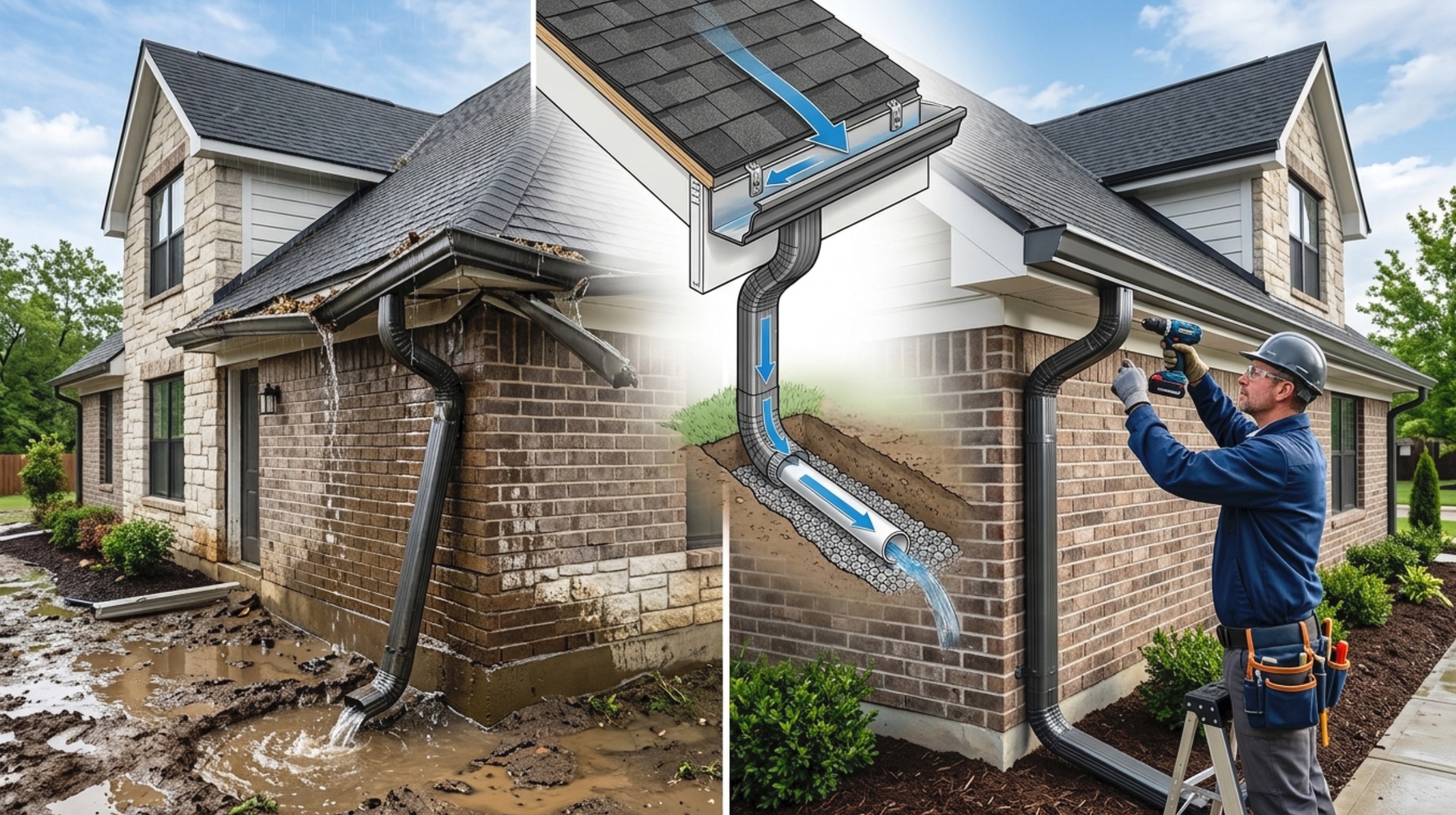
A damaged gutter does more than create an annoying drip. Broken gutters and downspouts can allow roof runoff to soak the fascia, stain siding, erode landscaping, and collect around the foundation.

Some gutter problems require a straightforward repair. A loose downspout may need to be reattached, a limited section may need additional support, or a failed connection may need to be corrected. Other problems affect the entire system and may make replacement more practical than continuing to pay for temporary repairs.

The challenge is determining which situation applies to your home.

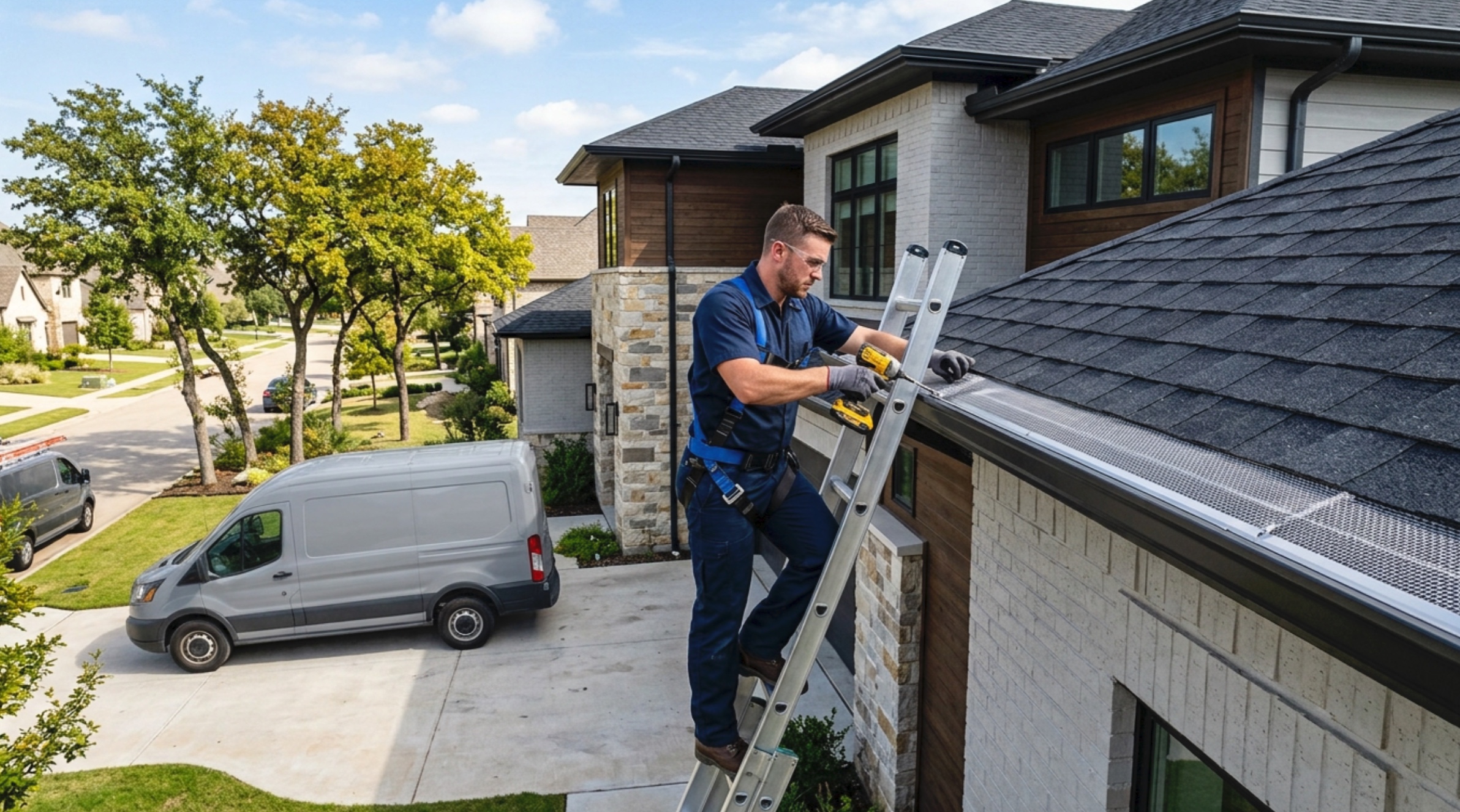
The Brothers that just do Gutters of North Dallas provides professional gutter repair for homeowners, businesses, HOAs, apartments, and multifamily properties. Our gutter specialists inspect the system, identify the likely cause of the problem, and explain whether repair or replacement provides the stronger long-term solution.

Call (469) 846-9166 to schedule a free on-site inspection and estimate.

What Does Professional Gutter Repair Include?

Professional rain gutter repair begins with understanding why the system is failing.

A contractor should evaluate more than the visibly damaged part. The problem may involve the gutter, downspout, fascia, roof edge, underground drainage, or the way the system was originally designed.

Depending on the property, professional gutter repair services may include:

  • Reattaching loose gutters
  • Replacing failed hangers
  • Correcting limited slope problems
  • Reconnecting downspouts
  • Repairing downspout elbows
  • Replacing damaged end caps
  • Addressing leaking corners
  • Clearing blocked gutters and downspouts
  • Adding downspouts or outlets
  • Repairing damaged fascia
  • Replacing isolated damaged components
  • Correcting drainage discharge problems
  • Recommending partial or complete replacement when repair is not dependable

The exact repair depends on the material, extent of damage, property access, and condition of the surrounding components.

Common Signs You Need Gutter Repair

Gutter damage is not always obvious from the ground. Some problems first appear during heavy rain.

Watch for these warning signs:

  • Water spilling over the front of the gutter
  • Water leaking behind the gutter
  • Gutters sagging between hangers
  • Sections pulling away from the house
  • Loose or missing fasteners
  • Leaking corners or end caps
  • Cracks, holes, or rust
  • Standing water inside the gutter
  • Downspouts separating at the joints
  • Water leaking from downspout elbows
  • Water pooling beside the foundation
  • Soil erosion below the roofline
  • Fascia discoloration or rot
  • Gutters shaking or moving in the wind
  • A downspout that does not drain during rain
  • Water entering a crawlspace, basement, or interior area

One symptom may have several possible causes. For example, overflowing water may come from a clog, an undersized gutter, incorrect slope, or too few downspouts.

That is why a complete inspection is more useful than automatically sealing, replacing, or reattaching the visible problem.

What Causes Broken Gutters?

Broken gutters may result from age, impact, poor maintenance, incorrect installation, or a system that cannot handle the roof’s water volume.

Common causes include:

  • Wet leaves and debris adding excess weight
  • Blocked downspouts
  • Standing water
  • Failed hangers
  • Rotted fascia
  • Falling tree branches
  • Wind and storm damage
  • Ladders resting against the gutter
  • Rust or corrosion
  • Incorrect gutter slope
  • Too few downspouts
  • Undersized gutters
  • Poor seam installation
  • Weak or incorrect fasteners
  • Repeated expansion and contraction
  • Damage from roof or exterior work

A repair should address the cause as well as the visible damage. Reattaching a gutter without correcting the standing water that pulled it loose may allow the same problem to return.

Common Gutter Repairs

The following are some of the most common residential gutter repair needs.

Loose Gutter Repair

Loose gutters may move, shake, or create a gap between the gutter and fascia.

The problem may involve:

  • Failed hangers
  • Loose screws
  • Enlarged fastener holes
  • Damaged fascia
  • Too much weight
  • Incorrect hanger spacing

A professional may be able to reposition the gutter, replace the hangers, use secure attachment points, and restore the correct slope.

If the fascia is rotten or the gutter is badly bent, additional repairs or replacement may be necessary.

Sagging Gutter Repair

A sag creates a low point where water and debris collect.

Possible solutions include:

  • Removing debris
  • Clearing downspouts
  • Replacing failed hangers
  • Adding additional support
  • Correcting the gutter’s pitch
  • Repairing the fascia
  • Replacing a permanently bent gutter run

A contractor should determine whether the sag is the original problem or the result of standing water and poor drainage.

Leaking Gutter Repair

A gutter may leak through:

  • Corners
  • End caps
  • Outlets
  • Seams
  • Holes
  • Cracks
  • Corroded areas

Limited leaks may be repairable when the material remains structurally sound. The affected area should be cleaned, dried, properly aligned, and secured before it is resealed.

Widespread corrosion, repeated seam failure, or multiple damaged areas may make replacement more practical.

Gutter Hanger Repair

Hangers support the gutter along the fascia.

When a hanger breaks or pulls loose, nearby supports must carry more weight. The gutter may begin sagging or separating from the house.

Repair may involve:

  • Replacing damaged hangers
  • Adding supports
  • Using appropriate screws
  • Moving the fastening point
  • Repairing weakened fascia
  • Correcting the gutter slope

Repeated hanger failure may indicate that the system is overloaded or attached to damaged wood.

Gutter Corner and End-Cap Repair

Corners and end caps are common leak points.

A professional repair may require:

  • Removing failed sealant
  • Cleaning and drying the joint
  • Realigning the components
  • Replacing loose fasteners
  • Applying compatible gutter sealant
  • Replacing the damaged corner or cap

Applying new sealant over wet, dirty, or deteriorated material may only create a temporary patch.

Common Downspout Problems

The gutter collects water, but the downspout carries it to the ground. A gutter system cannot function properly when the downspouts are damaged, clogged, or undersized.

Clogged Downspouts

Leaves, twigs, roof granules, dirt, and nesting material may block a downspout.

Signs include:

  • Gutters filling during rain
  • Overflow near the outlet
  • Little or no water leaving the bottom
  • Water leaking through downspout joints
  • Debris visible at the opening
  • Water backing up in nearby gutter runs

A blockage may occur at the outlet, inside a straight section, within an elbow, or where the downspout connects to underground drainage.

Loose Downspouts

Downspouts are secured to the home with straps or brackets.

They may become loose because of:

  • Missing fasteners
  • Wind
  • Impact
  • Damaged siding attachment points
  • Separation at the elbows
  • Movement in the gutter system
  • Poor original installation

A loose downspout should be reattached before it falls or pulls other components apart.

Separated Downspout Joints

Downspout sections and elbows can separate over time.

Water may then spill beside the wall instead of reaching the intended discharge point.

Repair may involve reconnecting and securing the sections, replacing damaged elbows, or correcting alignment.

Crushed or Dented Downspouts

Downspouts may be damaged by vehicles, equipment, falling objects, or landscaping work.

A major dent can restrict water flow and cause the gutter to back up. The damaged section may need replacement.

Downspouts Discharging Too Close to the House

A downspout may function mechanically but still create a drainage problem if it empties directly beside the foundation.

Possible solutions include:

  • Downspout extensions
  • Splash blocks
  • Regrading
  • Additional drainage
  • Underground gutter drainage

The objective is to move water away from the home rather than allow it to collect at the base of the wall.

Gutter and Drain Repair

Some gutter problems are connected to underground drainage.

If the downspout enters a buried drain, the problem may be below ground rather than inside the visible gutter.

Signs of an underground drainage issue may include:

  • Water backing up from the connection
  • Overflow near the downspout
  • Standing water around the drain opening
  • Slow discharge
  • Soil that remains wet
  • Water appearing in an unexpected area

A gutter and drain repair may involve evaluating both the above-ground system and the underground drainage path.

The Brothers that just do Gutters of North Dallas offers underground gutter drainage services in addition to gutter and downspout work.

Roof and Gutter Repair: Which Contractor Do You Need?

Homeowners sometimes have difficulty determining whether a leak is coming from the roof or gutter.

The source may involve:

  • Damaged roofing
  • Missing flashing
  • Incorrect drip edge
  • Water running behind the gutter
  • Overflowing gutters
  • Loose roof-edge materials
  • Damaged fascia
  • Incorrect gutter placement

A gutter specialist can evaluate the gutter system and visible roof-edge conditions. However, structural roofing problems may require a qualified roofing contractor.

The Brothers that just do Gutters performs limited roof-related and fascia work associated with gutter systems, but the appropriate solution depends on the source and scope of the damage.

When comparing roof and gutter repair services, make sure each contractor clearly explains which part of the project they are responsible for completing.

Gutter Repair and Cleaning: When You Need Both

Some repairs cannot be evaluated or completed properly until the gutters and downspouts are clean.

A system filled with leaves and standing water may hide:

  • Failed seams
  • Rust holes
  • Loose hangers
  • Incorrect slope
  • Damaged outlets
  • Downspout blockages

Cleaning may also solve what initially appears to be a repair problem.

For example, overflow may stop once the gutter and downspout are cleared. However, if the gutter has sagged under the weight of debris, cleaning alone may not restore the correct slope.

The Brothers that just do Gutters provides comprehensive cleaning that includes:

  • Gutter inspection
  • Full gutter cleaning
  • Downspout cleaning
  • Before-and-after photo documentation
  • Property cleanup
  • Repair recommendations

Professional gutter cleaning services start at a $450 minimum. The company positions its cleaning service as complete gutter care rather than basic debris removal.

How Much Does Gutter Repair Cost?

The honest answer is that gutter repair cost depends on the problem.

The Brothers that just do Gutters of North Dallas do not publish one average repair price because the scope can vary considerably.

A loose elbow and a long gutter run attached to rotted fascia are both gutter repairs, but they do not require the same materials, labor, or time.

Factors affecting gutter repair cost include:

  • Type of damage
  • Length of the affected section
  • Material
  • Number of stories
  • Roof pitch
  • Property accessibility
  • Number of failed hangers
  • Fascia condition
  • Downspout condition
  • Extent of rust or corrosion
  • Need for gutter cleaning
  • Underground drainage problems
  • Whether custom material is required
  • Whether replacement is a better option

A free on-site estimate is the most reliable way to determine the cost.

Why Number of Stories Affects Repair Cost

The number of stories is one of the most important cost factors.

Work on a two- or three-story property requires:

  • Larger ladders
  • Additional safety precautions
  • More equipment movement
  • More setup time
  • Slower material handling
  • Greater installation difficulty

Even a relatively small repair can cost more when it is difficult to access safely.

Why Roof Pitch and Access Matter

A roof around a 7/12 pitch or steeper may not be safely walkable for routine gutter work.

That means the crew must perform more work from ladders, which is more labor-intensive.

Access may also be affected by:

  • Fences
  • Pools
  • Trees
  • Landscaping
  • Narrow side yards
  • Sloped ground
  • Patio covers
  • Nearby buildings

These conditions influence the time and equipment required.

Does Material Affect Gutter Repair Cost?

Yes.

Common gutter materials include:

  • Aluminum
  • Copper
  • Galvanized steel
  • Galvalume
  • Specialty metals

Standard aluminum components are generally more readily available than specialty copper or custom materials.

Copper repairs may require special handling, materials, and additional procurement time.

The condition of the material also matters. A small isolated problem in solid aluminum may be repairable, while thin, corroded, or brittle material may not hold a dependable repair.

Repair or Replace Gutters?

One of the most important questions is, “Should I repair or replace my gutters?”

There is no universal answer. The decision depends on the condition and design of the complete system.

Repair May Make Sense When:

  • Damage is limited to one area
  • One downspout has separated
  • A small number of hangers have failed
  • One corner or end cap is leaking
  • The fascia remains solid
  • The gutters are correctly sized
  • The material is otherwise in good condition
  • The system has proper slope
  • The problem can be corrected without rebuilding the entire run

Replacement May Be Better When:

  • Damage affects several areas
  • Multiple seams leak
  • The gutters are badly rusted
  • Long sections are bent or twisted
  • The system repeatedly pulls away
  • The fascia is damaged along large areas
  • The gutters are too small for the roof
  • There are too few downspouts
  • The slope is incorrect throughout
  • The original installation was poor
  • Previous repairs continue to fail
  • Repair costs are approaching the value of replacement

Patrick Sweeney of The Brothers that just do Gutters of North Dallas describes the decision as highly situational. In many cases, the best solution for a system that does not work is to remove it and install a new system correctly rather than continue repairing fundamental design problems.

What Can and Cannot Be Repaired?

Potentially repairable problems include:

  • Loose downspouts
  • Separated elbows
  • A small number of failed hangers
  • Limited corner leaks
  • Loose end caps
  • Minor alignment problems
  • Isolated fascia damage
  • Limited blockages
  • Small damaged components

Problems that may require replacement include:

  • Widespread corrosion
  • Gutters crushed along long sections
  • Severe bending
  • Incorrect gutter size
  • Insufficient system capacity
  • Multiple failing seams
  • Extensive fascia rot
  • Repeated repair failures
  • Incorrect installation throughout the home

A free inspection helps determine where your system falls between these two categories.

What About Emergency Gutter Repair?

The Brothers that just do Gutters of North Dallas do not offer emergency gutter repair services.

Gutter problems are important, but they do not always require an emergency response. Most can be inspected and scheduled through the normal service process.

However, take immediate safety precautions when:

  • A gutter is actively falling
  • A large section is hanging from the roofline
  • Metal components are creating a hazard
  • Water is entering the home
  • Electrical equipment is exposed to water
  • Storm damage affects the roof structure
  • A tree has damaged the home

Keep people and pets away from unstable gutters. For active interior flooding, serious roof damage, electrical hazards, or unsafe structural conditions, contact the appropriate emergency restoration, electrical, roofing, or public safety provider.

After the immediate danger has been controlled, a gutter specialist can evaluate the gutter and downspout system.

What to Expect From a Gutter Repair Estimate

The Brothers that just do Gutters provide free inspections and estimates.

The process generally includes the following steps.

1. Schedule the Appointment

Call the company or submit an online request.

A representative gathers basic information about the property and concern.

2. Meet the Local Solutionist®

A local representative visits the property and walks around the home with you.

The team wants to understand:

  • What you have noticed
  • Where water is leaking
  • When overflow occurs
  • Whether the problem is getting worse
  • Where water collects
  • Whether previous repairs have been attempted

3. Ground-Level Evaluation

The initial estimate is completed from the ground rather than by using ladders.

The Solutionist® reviews visible conditions such as:

  • Loose gutters
  • Sagging
  • Downspout placement
  • Fascia condition
  • Roof pitch
  • Number of stories
  • Overflow patterns
  • Property access
  • Existing gutter size
  • Drainage around the home

4. Recommended Solution

The company explains whether the system appears to need:

  • Cleaning
  • Reattachment
  • Downspout repair
  • Fascia repair
  • Additional drainage
  • Partial replacement
  • Complete replacement

5. Written Estimate

If you request a quote, the company provides an estimate for the recommended work.

Repairs do not receive the same warranties as qualifying full gutter installations.

How Soon Can Gutter Repair Be Scheduled?

An estimate may often be available within a few days, although scheduling can occasionally take approximately one week.

After a project is approved, The Brothers that just do Gutters generally request a one- to two-week scheduling window.

Timing depends on:

  • Current workload
  • Weather
  • Materials
  • Project size
  • Property access
  • Specialty components

A 50% deposit is required to approve the estimate and secure the project’s place on the work schedule.

Residential Gutter Repair

Residential gutter repair should account for the complete way water moves around the home.

A professional should evaluate:

  • Roof runoff
  • Gutter capacity
  • Downspout capacity
  • Discharge locations
  • Fascia condition
  • Foundation drainage
  • Landscaping
  • Tree coverage
  • Roof pitch

The goal is not only to make the gutter look better. It is to restore reliable water control.

Commercial and Multifamily Gutter Repair

The Brothers that just do Gutters also provide commercial and multifamily gutter repair.

Properties served may include:

  • Retail buildings
  • Offices
  • Apartment communities
  • Condominiums
  • HOAs
  • Multifamily developments
  • Light commercial buildings
  • Managed residential properties

Commercial systems may involve:

  • Larger roof areas
  • Longer gutter runs
  • More downspouts
  • Higher elevations
  • Tenant safety concerns
  • Limited service access
  • Recurring maintenance needs

Property managers should schedule inspections before visible gutter problems begin affecting walls, walkways, entrances, or foundations.

How to Choose a Gutter Repair Company

When searching for a gutter repair company near me, compare more than price.

Ask the following questions:

  • Does the company specialize in gutters?
  • Is the inspection free?
  • Will someone evaluate the property in person?
  • Are the installers trained and insured?
  • Does the company use subcontractors?
  • Will they inspect the downspouts?
  • Can they repair fascia?
  • Do they offer gutter cleaning?
  • Do they provide underground drainage?
  • Will they explain repair versus replacement?
  • Is cleanup included?
  • What warranties apply?
  • How soon can service be scheduled?
  • Is financing available for larger projects?

A dedicated gutter repair contractor should be able to explain not only what is broken, but why it failed.

Local Gutter Repair in North Dallas

The Brothers that just do Gutters provides local gutter repair throughout communities including:

  • Dallas
  • North Dallas
  • Plano
  • Richardson
  • Allen
  • Frisco
  • McKinney
  • Carrollton
  • Prosper
  • The Colony
  • Highland Park
  • Lakewood
  • Murphy
  • Parker
  • Flower Mound

Homeowners searching for gutter repair Dallas, gutter repair Dallas TX, gutter repair Plano TX, gutter repair Richardson TX, gutter repair Allen TX, gutter repair Frisco TX, gutter repair McKinney TX, gutter repair Carrollton TX, gutter repair Prosper TX, or gutter repair The Colony TX can contact the North Dallas team for a free inspection.

The company’s focus is North Dallas and its surrounding service area. Pricing and service availability from contractors in Long Island, New Jersey, Pittsburgh, Seattle, Indianapolis, Denver, Chicago, Cincinnati, Atlanta, Houston, Colorado Springs, Portland, Memphis, Jersey City, Charlotte, Midland, or Odessa may differ because labor markets, property designs, and service conditions vary by location.

For an accurate local quote, work with a contractor who can inspect your North Texas property.

How to Prevent Future Gutter Damage

Regular maintenance can prevent many gutter repairs.

Recommended steps include:

  • Clean gutters and downspouts regularly.
  • Schedule maintenance approximately twice per year.
  • Increase service frequency for heavily wooded properties.
  • Watch the system during heavy rain.
  • Address overflow early.
  • Repair loose downspouts promptly.
  • Avoid leaning ladders against gutters.
  • Trim branches that can strike the roofline.
  • Inspect fascia for staining or rot.
  • Ensure downspouts drain away from the foundation.
  • Consider gutter guards for recurring debris.
  • Schedule an inspection after major storm damage.

Gutter guards may help reduce debris entering the system, but they do not correct existing damage, poor slope, inadequate downspouts, or undersized gutters.

Why Choose The Brothers that just do Gutters?

The Brothers that just do Gutters of North Dallas is a specialized gutter company—not a general handyman service that occasionally works on gutters.

Services include:

  • Gutter repair
  • Downspout repair
  • Gutter cleaning
  • Recurring maintenance
  • Seamless gutter installation
  • Gutter replacement
  • Gutter guards
  • Fascia repair
  • Underground drainage
  • Residential gutter services
  • Commercial gutter services
  • HOA and multifamily gutter repair

The company focuses on professional communication, transparent recommendations, thorough service, and long-term performance.

Schedule a Free Gutter Repair Estimate

Do not wait for a loose downspout, leaking corner, or broken gutter to cause fascia and foundation damage.

The Brothers that just do Gutters of North Dallas will evaluate the complete system, explain what can be repaired, and let you know when replacement is the more dependable option.

Call (469) 846-9166 or complete the online form to schedule your free on-site inspection and estimate.

Conclusion

Gutter and downspout problems can involve much more than the visibly broken component.

Loose hangers, clogs, poor slope, damaged fascia, undersized gutters, blocked downspouts, and incorrect drainage can all contribute to gutter failure.

Some problems can be repaired through cleaning, reattachment, hanger replacement, component replacement, or limited fascia work. Widespread rust, repeated leaks, incorrect sizing, extensive damage, and poor installation may make replacement the better long-term choice.

Gutter repair cost depends on the type of damage, property height, access, material, fascia condition, and scope of work. A free on-site inspection provides a more reliable answer than a generic online price.

The Brothers that just do Gutters of North Dallas specializes in professional gutter repair for homes, businesses, HOAs, apartments, and multifamily properties.

Call (469) 846-9166 today to request your free inspection and estimate.

Frequently Asked Questions

What is the most common gutter repair?

Common repairs include reattaching loose gutters, replacing hangers, reconnecting downspouts, sealing limited corner leaks, clearing blockages, and correcting minor slope problems.

How much does gutter repair cost?

Gutter repair cost depends on the problem, affected length, material, number of stories, roof access, fascia condition, and whether replacement is necessary. The Brothers that just do Gutters provide free estimates.

Do the Brothers that just do Gutters publish average repair prices?

No. The company evaluates each property because a minor downspout repair and a gutter system attached to rotted fascia require very different work.

Can broken gutters be repaired?

Some broken gutters can be repaired if the damage is isolated and the remaining material is in good condition. Badly bent, rusted, or undersized systems may need replacement.

Can a sagging gutter be repaired?

Yes, in some cases. Repair may involve cleaning, replacing hangers, restoring slope, securing fasteners, or repairing the fascia.

Can a loose downspout be reattached?

Yes. The repair may involve replacing straps, fasteners, elbows, or damaged downspout sections.

Why is my downspout leaking at the joint?

The sections may be loose, misaligned, damaged, or backed up by a blockage.

Can a clogged downspout damage the gutter?

Yes. A blockage can cause the gutter to fill with water, overflow, leak, sag, or pull away from the house.

Do gutters need to be cleaned before repair?

Sometimes. Debris and standing water may hide damage or prevent proper sealing and realignment.

Do The Brothers that just do Gutters provide gutter repair and cleaning?

Yes. The company offers professional cleaning, inspection, downspout cleaning, photo documentation, cleanup, and repair recommendations.

How much does professional gutter cleaning cost?

Professional gutter cleaning services start at a $450 minimum. The service includes comprehensive gutter care rather than basic debris removal.

Should I repair or replace my gutters?

Repair may make sense for isolated damage. Replacement may be better for widespread corrosion, repeated leaks, incorrect sizing, poor installation, or multiple failing sections.

Can seamless gutters be repaired?

Some corners, outlets, end caps, and limited damaged areas can be repaired. A badly bent or deteriorated seamless run may need replacement.

Do gutter repairs come with a warranty?

Repairs do not receive the same warranty coverage as qualifying full installations and replacements. Ask your Solutionist® about the terms for your project.

Do The Brothers that just do Gutters offer emergency gutter repair?

No. The company does not provide emergency gutter services.

What should I do if a gutter is falling?

Keep people and pets away from the area. If it presents an immediate hazard, contact an appropriate urgent exterior repair provider.

What should I do if gutter damage is causing water inside my home?

Protect the affected area when safe to do so and contact an appropriate roofing, water-remediation, or emergency service provider. The Brothers that just do Gutters can evaluate the gutter system after the immediate issue is controlled.

Do you repair roof damage?

The company can address certain roof-edge, fascia, and drainage issues connected to gutter systems. Larger roofing problems may require a roofing contractor.

Do you repair fascia boards?

Yes. Fascia repair is available when damaged wood affects the gutter system.

Do you repair underground gutter drains?

The company provides underground gutter drainage services. The correct solution depends on the type and location of the drainage problem.

Do you repair commercial gutters?

Yes. The company provides gutter services for commercial properties, businesses, HOAs, apartments, and multifamily communities.

How quickly can I get an estimate?

An estimate may often be scheduled within a few days, although availability may occasionally extend to approximately one week.

How soon can the repair be completed?

Approved projects are generally given a one- to two-week scheduling window, depending on weather, workload, and material availability.

Is a deposit required?

A 50% deposit is required after the estimate is approved to secure the project’s place on the work schedule.

Does the company offer financing?

Financing options may be available to qualified homeowners for eligible projects through third-party providers.

How do I find the best gutter repair company near me?

Choose a gutter specialist that performs an in-person inspection, evaluates gutters and downspouts together, provides clear recommendations, uses trained and insured installers, and explains when replacement is more appropriate than repair.

How do I schedule a free gutter repair estimate?

Call The Brothers that just do Gutters of North Dallas at (469) 846-9166 or complete the online estimate request form.

Sagging, Loose, and Pulling-Away Gutters: Causes and Repair Options

Gutters should remain securely attached to the roofline while directing rainwater toward the downspouts. When a gutter begins sagging, shifting, or separating from the house, the system may no longer have the proper slope or support needed to control water.

Homeowners often notice a widening gap between the gutter and fascia, sections hanging lower than the rest of the system, or water spilling behind the gutters during storms. These are not only appearance problems. Loose gutters can allow water to damage the fascia, roof edge, siding, landscaping, and foundation.

If you are asking, “Why are my gutters pulling away from my house?”, the answer may involve failed hangers, damaged fascia, trapped debris, standing water, poor installation, or an undersized system.

The Brothers that just do Gutters of North Dallas provides free on-site gutter inspections and estimates. Our gutter specialists evaluate why the system is failing and explain whether it can be reattached, repaired, or should be replaced.

Call (469) 846-9166 to schedule your free inspection.

What Do Sagging, Loose, and Pulling-Away Gutters Mean?

These terms describe related problems, but they are not always exactly the same.

Sagging Gutters

Sagging gutters dip lower in one or more areas.

The gutter may bow between hangers, lean forward, or form a low spot where water collects. A sag can affect the system’s slope and prevent water from reaching the downspouts.

Loose Gutters

Loose gutters are no longer secured firmly to the house.

The gutter may move when touched, shake during wind, or have hangers and fasteners that are beginning to separate from the fascia.

Gutters Pulling Away From the House

Gutters pulling away from the house create a visible gap between the back of the gutter and the fascia board.

This may allow roof runoff to flow behind the system rather than into it. The weight of the loose gutter can also pull additional hangers free and damage the fascia.

These symptoms frequently occur together. A loose section may begin pulling away, which changes its slope and causes it to sag.

Why Are My Gutters Pulling Away From My House?

A gutter system usually pulls away because the connection between the gutter and the house can no longer support the load.

Common causes include:

  • Loose or failed hangers
  • Fasteners pulling out of the fascia
  • Rotted fascia boards
  • Gutters filled with debris
  • Standing water
  • Poor gutter slope
  • Insufficient hanger spacing
  • Incorrect fasteners
  • Ice or snow weight
  • Storm damage
  • Falling tree limbs
  • Ladders placed against the gutter
  • Gutters that are too small
  • Too few downspouts
  • Poor original installation
  • Aging materials

Identifying the underlying cause matters. Simply pushing the gutter back into place will not provide a lasting repair if the fascia is rotted or the system continually fills with standing water.

What Causes Sagging Gutters?

Sagging usually occurs when a section of gutter carries more weight than its support system can handle.

Debris Buildup

Leaves, twigs, dirt, seeds, pollen, and roof granules can collect inside the gutter.

When this material becomes wet, it grows significantly heavier. That weight places additional pressure on the hangers and fascia.

Debris may also block the downspouts, causing the gutter to fill with water during a storm.

A long gutter run filled with water and wet material can become heavy enough to bend, sag, or detach from the house.

Standing Water

A properly installed gutter should slope gradually toward an outlet and downspout.

If the slope is incorrect, water may remain inside the system after the rain stops. This standing water adds ongoing weight and pressure.

Standing water may be caused by:

  • Poor installation
  • A shifted gutter run
  • Failed hangers
  • A low spot
  • A clogged downspout
  • An outlet positioned too high
  • Structural movement
  • Gutter sections bending over time

A sag can create standing water, and standing water can make the sag worse. This cycle continues until the system is repaired or replaced.

Hangers Spaced Too Far Apart

Gutter hangers provide support along each run.

When hangers are spaced too far apart, the gutter material must carry more weight between support points. This can cause the gutter to bow in the middle.

The appropriate spacing depends on the gutter material, system design, roof conditions, and expected load.

Adding hangers may help in some situations, but only when the gutter and fascia remain in suitable condition.

Damaged or Missing Hangers

Individual hangers may loosen, bend, break, or separate from the fascia.

When one hanger fails, nearby hangers must carry additional weight. That can lead to a larger section becoming loose.

Replacing one or more hangers may correct an isolated problem, but repeated hanger failure may indicate a larger issue with the fascia, slope, or overall gutter design.

Weak or Rotted Fascia

The fascia board is the wood surface behind the gutter.

Even a strong hanger cannot support the gutter if its fastener is driven into soft or rotted wood.

Fascia damage may be caused by:

  • Water leaking behind the gutter
  • Overflow
  • Roof leaks
  • Missing or incorrect drip edge
  • Failed paint or protective coating
  • Long-term moisture exposure
  • Previous installation damage

When the fascia deteriorates, fasteners may pull out and leave visible holes. The gutter then begins separating from the home.

In these cases, the damaged fascia may need repair before the gutter can be securely reattached.

Incorrect Gutter Pitch

A gutter that does not slope correctly may hold water in the middle or at the wrong end.

The added weight can cause hangers to loosen and the gutter to sag.

Correcting the pitch may require:

  • Removing or loosening hangers
  • Establishing the proper high point
  • Repositioning the gutter
  • Installing new hangers
  • Testing the water flow

If the gutter is already bent or permanently deformed, repositioning it may not be enough.

What Causes Loose Gutters?

Loose gutters often begin with a small attachment problem and become worse over time.

Fasteners Pulling Out

Hidden hangers and other gutter supports typically use screws or fasteners that attach to the fascia.

Fasteners may loosen because of:

  • Rotten wood
  • Improper installation
  • Short or incorrect screws
  • Repeated movement
  • Excessive gutter weight
  • Wind
  • Material expansion and contraction
  • Previous holes that no longer hold securely

Driving another screw into the same damaged hole may not provide a dependable repair. A contractor may need to use a new fastening point or repair the underlying wood.

Improper Original Installation

Incorrect gutter installation may involve:

  • Too few hangers
  • Poor hanger spacing
  • Incorrect screws
  • Attachment to weak fascia
  • Poor slope
  • Inadequate downspouts
  • Gutters mounted too low
  • Improper alignment beneath the roof edge

A system may appear acceptable when first installed but begin loosening after repeated storms.

When several installation mistakes affect the same system, complete replacement may be more practical than repairing each problem separately.

Wind and Storm Damage

Strong winds can place pressure on a loose gutter edge.

Storm damage may also involve:

  • Falling branches
  • Hail
  • Windblown debris
  • Water overwhelming the system
  • Damage from nearby roof materials

A partially loose gutter should be repaired before another storm worsens the separation.

Ladders Leaning Against Gutters

Gutters are not designed to support the weight of a ladder and a person.

Leaning a ladder directly against the front lip can:

  • Bend the gutter
  • Damage the finish
  • Loosen hangers
  • Change the slope
  • Cause separation from the fascia

Use appropriate ladder stabilizers and safe access methods when performing exterior maintenance.

Professional service is generally safer for two-story properties, steep roofs, and difficult-to-reach sections.

Are Sagging Gutters Dangerous?

A sagging gutter may eventually detach from the house.

A falling section of metal can damage:

  • Windows
  • Siding
  • Landscaping
  • Vehicles
  • Outdoor furniture
  • People or pets below

The water-management consequences can also be serious.

When a gutter sags, water may collect in the low point and overflow. That water may then soak the fascia or fall beside the foundation.

A visibly loose or severely sagging gutter should be inspected promptly.

The Brothers that just do Gutters of North Dallas does not offer emergency gutter services. If a gutter is actively falling or creating an immediate hazard, keep people away from the area and contact an appropriate urgent exterior repair provider.

How Loose Gutters Damage the Fascia

Loose gutters can both result from fascia damage and make that damage worse.

As the gutter separates, water may flow through the growing gap and soak the wood behind it.

Repeated exposure can cause:

  • Soft or spongy wood
  • Dark staining
  • Peeling paint
  • Mold
  • Rot
  • Failed fasteners
  • Damage to the roof edge
  • Damage to nearby rafters

Reattaching a gutter without addressing deteriorated fascia may only provide a temporary result.

The Brothers that just do Gutters provide fascia repair when the wood must be restored before the gutter system can be secured.

Can Sagging Gutters Be Repaired?

Some sagging gutters can be repaired.

Repair may be possible when:

  • Damage is limited to one section
  • The fascia is solid
  • The gutter is not badly bent
  • The material is in good condition
  • Only a few hangers have failed
  • The gutter size is appropriate
  • The downspouts provide enough capacity
  • The original slope can be restored

Possible repairs include:

  • Cleaning out debris
  • Clearing downspouts
  • Replacing hangers
  • Adding support
  • Installing new fasteners
  • Repositioning the gutter
  • Correcting the slope
  • Reattaching loose downspouts
  • Repairing a limited fascia area

A professional should determine why the gutter sagged before deciding which repair is appropriate.

How Are Gutters Reattached to a House?

The specific process depends on the system, but a professional repair may involve the following steps.

1. Remove Excess Weight

The gutter and downspouts should be cleared of debris and standing water.

This allows the contractor to evaluate the system without the added load.

2. Inspect the Fascia

The attachment surface must be checked for rot, cracks, old fastener holes, and water damage.

Damaged fascia may require repair or replacement.

3. Evaluate the Gutter

The contractor determines whether the gutter is bent, twisted, rusted, or otherwise too damaged to reuse.

4. Check the Slope

The proper high and low points are established so water can move toward the outlets.

5. Replace or Add Hangers

Failed supports may be removed and replaced. Additional hangers may be added when appropriate.

6. Secure the System

The gutter is repositioned and fastened into solid material.

7. Test Water Flow

The completed repair should be checked for proper drainage, standing water, and leakage.

Should You Hammer Loose Gutter Spikes Back In?

Older gutters may use spikes and ferrules rather than modern hidden hangers.

When the spikes begin pulling out, homeowners sometimes hammer them back into the same holes.

This may provide a temporary improvement, but the original holes may be enlarged and unable to hold the spikes securely.

Repeatedly hammering them back may also damage the fascia or gutter.

A more durable repair may involve:

  • Replacing spikes with appropriate screws
  • Installing modern hidden hangers
  • Moving fasteners to solid attachment points
  • Repairing damaged fascia
  • Replacing the affected gutter run

The correct option depends on the existing material and condition.

When Loose Gutters Should Be Replaced

Replacement may make more sense when:

  • Several gutter runs are pulling away
  • The system is extensively bent
  • The gutters are rusted or corroded
  • Numerous hangers have failed
  • The gutters are too small for the roof
  • Downspout capacity is inadequate
  • The original installation is poor throughout
  • The slope cannot be restored
  • The material is cracked or weakened
  • Repairs have repeatedly failed
  • The fascia is damaged along large sections
  • Water continues overflowing after cleaning

In many cases, the best solution for a gutter system that does not work is to remove it and install a properly sized system with new hangers, downspouts, and correct slope.

How Gutter Size Contributes to Sagging

An undersized gutter may overflow frequently during heavy rain.

Large roofs, long gutter runs, and steep pitches can send significant water into the system quickly.

Five-inch gutters may be suitable for many homes, but six-inch gutters are often recommended for:

  • Larger roofs
  • Steep roof slopes
  • Long runs
  • Large roof valleys
  • Homes with recurring overflow

Some very large homes may require 7-inch gutters.

A gutter that is too small may remain overloaded during storms. The added water weight and overflow can contribute to loose hangers, fascia damage, and sagging.

How Downspouts Affect Loose Gutters

Downspouts allow collected water to leave the gutter.

When a downspout is clogged or the system has too few downspouts, water may back up and fill the gutter.

A full gutter places substantial weight on the hangers.

Downspout-related problems include:

  • Debris blockages
  • Small outlets
  • Too few downspouts
  • Crushed sections
  • Separated elbows
  • Underground drainage clogs
  • Poorly placed outlets

Repairing loose gutters without correcting inadequate drainage may allow the problem to return.

How Gutter Cleaning Helps Prevent Sagging

Regular cleaning removes the wet debris that adds weight and blocks water flow.

The Brothers that just do Gutters of North Dallas generally recommends professional gutter maintenance approximately twice per year, depending on the property.

Homes with heavy tree coverage may need more frequent service.

Professional gutter cleaning may include:

  • Full gutter cleaning
  • Downspout cleaning
  • System inspection
  • Before-and-after photographs
  • Property cleanup
  • Repair recommendations

Cleaning services begin at a $450 minimum because the company provides a comprehensive gutter service rather than basic debris removal.

Can Gutter Guards Prevent Loose Gutters?

Gutter guards can help reduce the amount of debris entering the system.

This may lower the risk of clogs, standing water, and heavy wet debris contributing to gutter sag.

However, gutter guards do not correct:

  • Rotted fascia
  • Incorrect slope
  • Loose fasteners
  • Undersized gutters
  • Too few downspouts
  • Existing installation defects

The underlying gutter system should be functional before guards are installed.

The Brothers that just do Gutters offers BroGuard, a gutter protection system built with a heavy-gauge aluminum frame and stainless steel micro mesh.

A free inspection can determine whether the existing gutters are suitable for guards or need repairs first.

DIY Repair vs. Professional Gutter Repair

A homeowner may be able to clear a low, accessible gutter or identify an obviously loose component.

However, safely reattaching and realigning gutters often requires:

  • Ladder work
  • Accurate measurements
  • Correct slope
  • Proper fasteners
  • Evaluation of the fascia
  • Handling long gutter sections
  • Working near roof edges
  • Testing water flow

DIY repairs may fail when the homeowner addresses the visible symptom but not the root cause.

For example:

  • Adding a hanger will not fix rotted fascia.
  • Resealing a gap will not fix an incorrect slope.
  • Reattaching a gutter will not solve an undersized system.
  • Cleaning debris will not correct too few downspouts.

Professional evaluation is especially important for multi-story homes, steep roofs, widespread damage, or systems that repeatedly pull away.

How Much Does Sagging or Loose Gutter Repair Cost?

The cost depends on:

  • Length of the affected area
  • Number of failed hangers
  • Fascia condition
  • Number of stories
  • Roof pitch
  • Property access
  • Gutter material
  • Whether the gutter is bent
  • Downspout condition
  • Whether replacement is required

The Brothers that just do Gutters of North Dallas do not publish a universal repair price because the appropriate solution depends on the property.

Free on-site inspections and estimates are available.

Gutter repairs do not include the same warranty coverage as qualifying full installations or replacements.

What Happens During a Gutter Inspection?

A local Solutionist® walks the property with the homeowner and listens to the concerns they have noticed.

The evaluation may consider:

  • Visible gutter separation
  • Sagging areas
  • Hanger condition
  • Fascia condition
  • Roof pitch
  • Number of stories
  • Property access
  • Gutter size
  • Downspout placement
  • Overflow patterns
  • Water pooling near the foundation
  • Existing installation quality

The initial estimate is performed from the ground rather than by climbing ladders.

The company then provides its professional opinion and, when requested, a quote for the recommended work.

Repair or Replacement: How Is the Decision Made?

The decision is situational.

A limited repair may be appropriate when the system is otherwise in good condition and the problem affects only a small area.

Replacement may be better when the gutters are poorly installed, repeatedly failing, extensively damaged, or unable to handle the roof’s water volume.

The goal should be to provide a dependable water-management system rather than the least expensive temporary patch.

Why Choose The Brothers that just do Gutters?

The Brothers that just do Gutters of North Dallas specializes in gutter systems.

Services include:

  • Loose gutter repair
  • Sagging gutter repair
  • Gutter reattachment
  • Downspout repair
  • Fascia repair
  • Gutter cleaning
  • Recurring maintenance
  • Gutter replacement
  • Seamless gutter installation
  • Gutter guards
  • Underground drainage
  • Residential gutter services
  • Commercial gutter services
  • HOA and multifamily gutter services

The company focuses on professional communication, transparent recommendations, quality workmanship, and premium customer service.

Service areas include Plano, Richardson, Dallas, Allen, Frisco, McKinney, Carrollton, Highland Park, Lakewood, Murphy, Parker, Flower Mound, Prosper, The Colony, and surrounding North Dallas communities.

Schedule Your Free Gutter Inspection

Loose or sagging gutters rarely improve on their own.

The longer a system remains separated from the house, the greater the risk of water leaking behind it, damaging the fascia, and eroding the soil around the foundation.

The Brothers that just do Gutters of North Dallas will inspect the system and explain whether it can be reattached, repaired, or should be replaced.

Call (469) 846-9166 or complete the online form to schedule your free inspection and estimate.

Conclusion

Gutters pulling away from a house are usually a sign that the system has become overloaded, lost support, or is attached to damaged fascia.

Common causes include clogged gutters, standing water, failed hangers, incorrect slope, poor installation, storm damage, and inadequate downspouts.

Some loose gutters can be repaired by cleaning the system, replacing hangers, restoring the proper slope, and securing the gutter to solid fascia.

Replacement may be the better option when the material is badly bent, rusted, undersized, incorrectly installed, or failing throughout multiple areas.

Do not ignore a visible gap between the gutter and your home. Water can run behind the system and damage the fascia, roof edge, and nearby structural materials.

Call The Brothers that just do Gutters of North Dallas at (469) 846-9166 to request your free inspection and estimate.

Frequently Asked Questions

Why are my gutters pulling away from my house?

Common causes include failed hangers, loose fasteners, rotted fascia, debris buildup, standing water, improper slope, poor installation, and gutters that are overloaded or undersized.

What causes sagging gutters?

Sagging may be caused by wet debris, blocked downspouts, standing water, insufficient hanger spacing, damaged hangers, incorrect pitch, or weakened gutter material.

Why are my gutters loose?

Fasteners may have pulled out of the fascia, hangers may have failed, or the wood behind the gutter may be damaged. Excess weight and improper installation can also loosen the system.

Can loose gutters be repaired?

Yes, in some cases. Repairs may include replacing hangers, installing new fasteners, correcting the pitch, reattaching the gutter, or repairing damaged fascia.

Can sagging gutters be pushed back into place?

Simply pushing them back usually does not address the cause. The gutter must be cleaned, inspected, repositioned, properly supported, and attached to solid material.

Do sagging gutters always need replacement?

No. A limited sag may be repairable if the gutter and fascia remain in good condition. Widespread bending, rust, incorrect sizing, or repeated failure may justify replacement.

Can clogged gutters cause sagging?

Yes. Wet leaves and standing water add significant weight, which can bend the gutter and pull hangers from the fascia.

Can a clogged downspout make gutters pull away?

Yes. A clogged downspout can cause water to back up and fill the gutter, placing additional weight on the hangers.

How do professionals reattach gutters?

Professionals remove debris, inspect the fascia, check the gutter condition, restore the correct slope, replace or add hangers, secure the gutter, and test water flow.

Can you screw gutters back into the same holes?

Old holes may be enlarged or surrounded by damaged wood. A secure repair may require new attachment points, different fasteners, or fascia repair.

Should old gutter spikes be replaced?

Loose spikes may be replaced with appropriate screws or modern hidden hangers. The correct method depends on the system and fascia condition.

What happens if I ignore loose gutters?

The gutter may continue separating, leak behind the system, damage the fascia, overflow, or eventually fall from the house.

Are loose gutters dangerous?

They can be. A heavily damaged section may detach and fall. Keep people away from visibly unstable gutters and arrange an inspection.

Why is water leaking behind my loose gutter?

The gap may allow roof runoff to reach the fascia instead of entering the gutter. Overflow, poor alignment, or missing drip edge may also contribute.

Does damaged fascia need to be replaced before gutter repair?

Damaged fascia must provide a solid attachment surface. Depending on the extent of deterioration, it may need repair or replacement before the gutter is secured.

Can improper gutter slope make the system loose?

Yes. Incorrect slope can create standing water, which adds weight and puts pressure on the hangers.

Can undersized gutters pull away?

Undersized gutters may fill and overflow more frequently. That repeated water load can contribute to sagging and failed attachments.

Will gutter guards fix sagging gutters?

No. Guards may help reduce debris, but existing slope, hanger, fascia, and sizing problems must be corrected first.

How often should gutters be cleaned to prevent sagging?

The Brothers that just do Gutters generally recommends approximately twice-per-year maintenance, though heavily wooded properties may need more frequent service.

How much does loose gutter repair cost?

Cost depends on the affected length, hanger condition, fascia damage, height, access, and whether replacement is needed. A free on-site estimate provides accurate pricing.

Are gutter repairs covered by a warranty?

Repairs do not receive the same warranty coverage as qualifying full installations or replacements. Ask your Solutionist® about the terms for your project.

Do the Brothers that just do Gutters repair fascia?

Yes. Fascia repair is available when damaged wood affects the gutter system.

Do you offer emergency gutter repair?

No. The company does not provide emergency gutter services.

How do I schedule a gutter inspection?

Call The Brothers that just do Gutters of North Dallas at (469) 846-9166 or submit the online estimate request form.
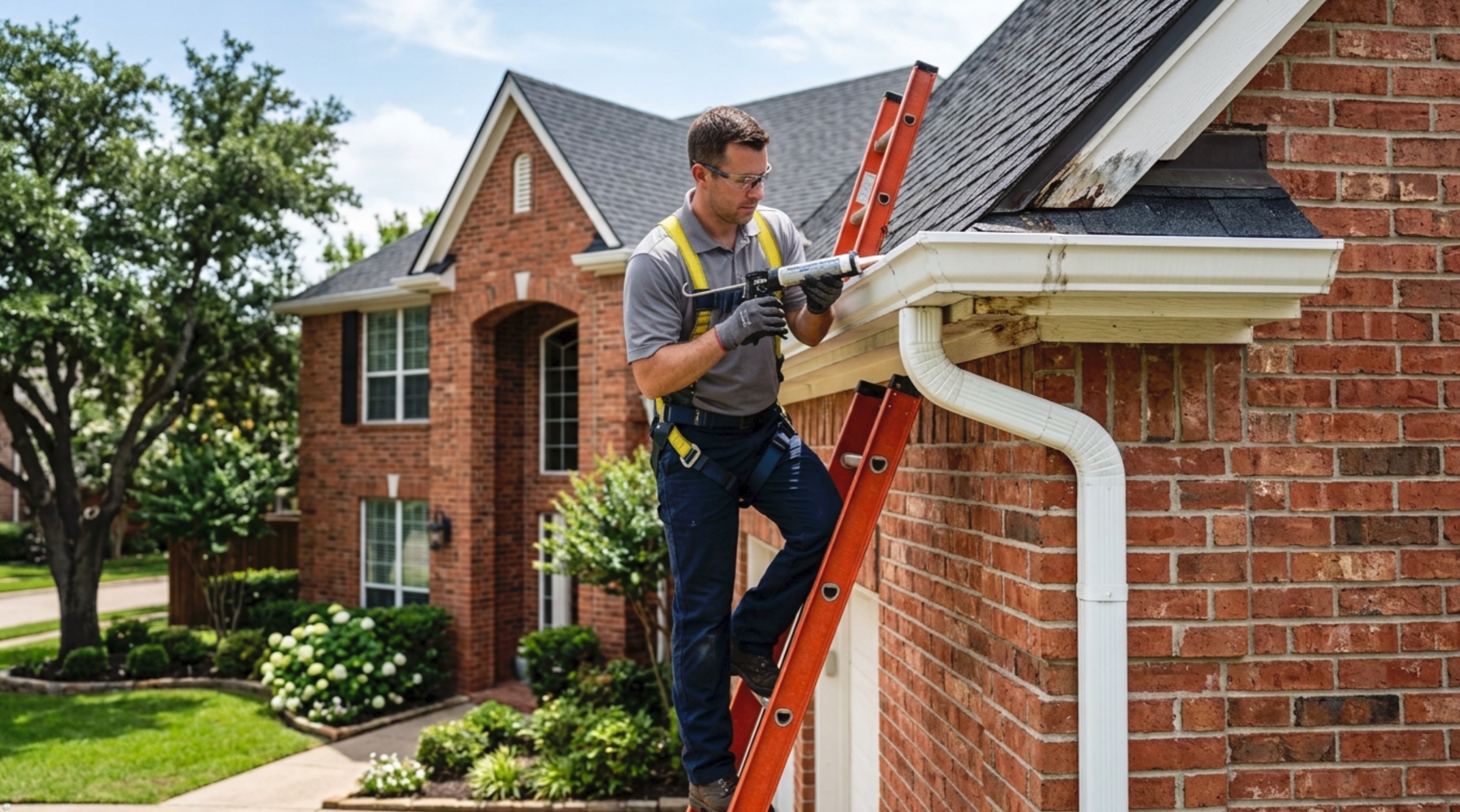
Gutter Leak Repair Guide: Causes, Seams, Rust, and Water Behind Gutters

Leaking gutters can look like a small exterior problem, but the water escaping from the system may damage the fascia, roofline, siding, landscaping, and soil around your foundation.

The first step in effective gutter leak repair is identifying where the water is coming from. A gutter may leak through a failed seam, overflow because of a clog, pull away from the fascia, develop holes from corrosion, or allow water to run behind it because the system was installed incorrectly.

These problems do not all require the same repair.

Some leaking gutters can be sealed or reattached. Others are too damaged, poorly sized, or incorrectly installed to provide a dependable long-term repair. In those cases, replacing the affected section or the complete system may make more sense.

The Brothers that just do Gutters of North Dallas provides free on-site gutter inspections and estimates. Our gutter specialists evaluate the complete system and explain whether repair or replacement is the better solution for your home.

Call (469) 846-9166 to schedule your free inspection.

Why Are My Gutters Leaking?

Gutters can leak for many reasons. The location and timing of the leak usually provide clues about what is wrong.

Common causes include:

  • Clogged gutters
  • Blocked downspouts
  • Failed gutter seams
  • Loose corners and miters
  • Rust or corrosion
  • Cracks and holes
  • Improper gutter slope
  • Gutters pulling away from the fascia
  • Damaged or missing sealant
  • Insufficient downspouts
  • Undersized gutters
  • Damaged fascia boards
  • Missing or incorrect drip edge
  • Incorrect gutter placement
  • Storm or impact damage

A homeowner may see water dripping from one area and assume that spot is the source. However, water can travel along the bottom or back of a gutter before falling somewhere else.

A thorough inspection should evaluate the full gutter run, not only the visible drip.

The Difference Between a Leak and an Overflow

Before trying to fix the gutter, determine whether water is leaking through the system or overflowing over its edge.

A true leak occurs when water passes through:

  • A seam
  • A corner
  • A hole
  • A crack
  • An outlet connection
  • An end cap
  • A failed seal

An overflow occurs when water rises above the gutter or shoots past its edge.

Overflow may be caused by:

  • Debris buildup
  • A clogged downspout
  • Too few downspouts
  • Gutters that are too small
  • Incorrect slope
  • A large roof valley directing too much water into one area
  • A gutter installed too far below the roof edge

Sealing an overflowing gutter will not correct the problem because the water is not escaping through a damaged seam. The gutter’s capacity or drainage must be addressed.

Why Leaking Gutters Should Not Be Ignored

A small gutter leak may release water in the same place every time it rains.

Over time, that repeated exposure may cause:

  • Fascia board rot
  • Damage to the wood behind the gutter
  • Roof rafter deterioration
  • Mold or mildew
  • Siding stains
  • Peeling exterior paint
  • Landscape erosion
  • Soil displacement
  • Water pooling near the foundation
  • Foundation instability
  • Crawlspace or basement moisture
  • Pest activity

Gutters are designed to control roof runoff. When the system leaks, water is no longer being directed safely away from the property.

Repairing the source early may help prevent a more expensive problem.

How to Fix a Leaky Gutter

The correct way to fix a leaky gutter depends on the cause and the condition of the material.

A professional repair process may involve:

  1. Identifying the source of the water.
  2. Cleaning and drying the affected area.
  3. Checking the gutter’s slope.
  4. Inspecting seams, corners, outlets, and end caps.
  5. Evaluating hanger spacing and attachment.
  6. Looking for rust, cracks, or holes.
  7. Checking the downspouts for blockages.
  8. Inspecting the fascia behind the gutter.
  9. Repairing or replacing the damaged component.
  10. Testing the system’s water flow.

Do not assume that applying sealant to the visible drip will solve the problem. The gutter may be leaking because it is holding standing water, twisting away from the fascia, or backing up from a blocked downspout.

The underlying cause should be corrected before the affected joint is resealed.

How to Repair Gutter Seams

Gutter seams are common leak points, especially in sectional gutter systems.

A seam is created where two sections connect. Corners and miters also contain joints that must remain sealed while the gutter expands and contracts with temperature changes.

Over time, seam failure may occur because of:

  • Aging sealant
  • Standing water
  • Movement between sections
  • Loose fasteners
  • Corrosion
  • Poor installation
  • Dirt trapped around the joint
  • Temperature expansion and contraction
  • Excessive weight from debris

Basic Gutter Seam Repair Process

A proper seam repair generally requires the following steps:

1. Remove Debris

Leaves, mud, roof granules, and standing water must be removed from the affected area.

Sealant will not bond correctly to a dirty or wet surface.

2. Remove Failed Sealant

Loose, cracked, or deteriorated sealant should be removed carefully.

Simply applying new material over failed sealant may create a temporary patch that separates again.

3. Clean and Dry the Joint

The seam should be cleaned thoroughly and allowed to dry.

Moisture trapped beneath new sealant can interfere with adhesion.

4. Check the Alignment

The connected gutter sections should sit correctly against one another.

If the seam has separated because the gutter is sagging or twisting, the alignment and support must be corrected before sealing.

5. Secure Loose Components

Loose screws, rivets, or fasteners may need to be tightened or replaced.

A moving seam is likely to begin leaking again.

6. Apply the Correct Gutter Sealant

A sealant designed for exterior gutter use should be applied according to product requirements.

The repair must be allowed to cure before being exposed to water.

When a Gutter Seam Should Not Be Repaired

Sealing may not provide a lasting solution when:

  • The metal around the seam is rusted through
  • The gutter is bent or twisted
  • Multiple seams are failing
  • The system holds standing water
  • The joint repeatedly separates
  • The gutters are incorrectly pitched
  • The material is brittle or extensively damaged
  • The system is undersized
  • The fascia cannot hold the gutter securely

In these situations, replacing the affected section or the entire system may be more dependable than repeatedly resealing it.

Do Seamless Gutters Leak?

Seamless gutters can still leak, but they have fewer joints along the straight gutter runs.

A seamless gutter is formed in one continuous section for a specific roof edge. It does not contain the repeated connection points found in many sectional systems.

However, seamless gutters still have seams at:

  • Inside corners
  • Outside corners
  • End caps
  • Outlets
  • Downspout connections

Those areas can leak if the sealant fails, the gutter shifts, or water remains in the system.

The word “seamless” does not mean the system has no joints anywhere. It means long straight runs contain fewer seams.

Seamless Gutter Repair: What Can Be Fixed?

Some seamless gutter problems may be repairable.

Possible repairs include:

  • Resealing a corner
  • Replacing an end cap
  • Repairing an outlet connection
  • Adding or replacing hangers
  • Reattaching a loose section
  • Correcting a limited slope issue
  • Reconnecting a downspout
  • Repairing a small isolated hole
  • Adding a downspout when capacity allows

The feasibility of a repair depends on the condition of the complete gutter run.

When Seamless Gutters May Need Replacement

Replacement may be recommended when:

  • The long gutter section is badly bent
  • The metal has extensive corrosion
  • The gutter is too small for the roof
  • Several areas are leaking
  • The pitch is wrong throughout the run
  • The fascia is extensively damaged
  • The gutter has pulled away in multiple places
  • Previous repairs continue to fail
  • The outlet and downspout design is inadequate

Because seamless gutters are formed as long continuous sections, replacing a badly damaged portion may require replacing the full run rather than inserting a small matching piece.

What Causes Water to Leak Behind Gutters?

Water leaking behind the gutter is especially concerning because it may soak the fascia and other wood along the roofline.

Common causes include:

  • Gutters installed too far from the roof edge
  • Missing drip edge
  • Incorrectly installed drip edge
  • A gap between the roof and gutter
  • Loose gutters
  • Sagging gutters
  • Improper slope
  • Overflow caused by a clog
  • Water shooting past the gutter
  • Roof damage
  • Fascia deterioration
  • Gutters mounted too low
  • A steep roof directing water behind the system

The source may be related to the roof, the gutter, or the connection between them.

Why Water Behind Gutters Damages Fascia

The fascia is the board located behind the gutter.

When water repeatedly runs behind the system, the wood may remain wet for long periods. That can cause:

  • Soft spots
  • Discoloration
  • Peeling paint
  • Mold
  • Rot
  • Loose fasteners
  • Gutters pulling away
  • Damage to nearby roof components

Once the fascia has deteriorated, resealing the gutter may not be enough. The damaged wood may need to be repaired or replaced before the gutter can be attached securely.

The Brothers that just do Gutters of North Dallas provides fascia repair services when needed as part of a broader gutter solution.

Can a Drip Edge Fix Water Behind Gutters?

A drip edge is metal flashing installed along the roof edge to help direct water away from the roof deck and into the gutter.

A missing, damaged, or incorrectly positioned drip edge may contribute to water running behind the system.

However, adding flashing is not the correct answer in every situation.

The gutter may also be:

  • Mounted too low
  • Pulling away
  • Overflowing
  • Poorly pitched
  • Too small
  • Misaligned with the roof

A professional inspection should determine why water is reaching the fascia before a solution is selected.

What Causes Rusted Gutters?

Rust develops when iron or steel is exposed to moisture and oxygen.

Aluminum gutters do not rust in the same way steel gutters do, although aluminum can corrode or develop holes under certain conditions.

Common causes of rusted gutters include:

  • Aging galvanized coating
  • Scratched or damaged protective finishes
  • Standing water
  • Wet debris
  • Failed paint
  • Repeated exposure to moisture
  • Chemical reactions between incompatible metals
  • Poor maintenance
  • Long-term seam leaks

Rust may begin as surface discoloration and progress into weakened metal, flaking, cracks, or holes.

What to Do About Rusted Gutters

The right solution depends on how severe the rust is.

Minor Surface Rust

Limited surface rust may sometimes be cleaned, treated, primed, and painted.

The area must be evaluated to ensure the metal remains structurally sound.

Localized Rust Around a Seam

A rusted seam may require cleaning, reinforcement, sealing, or partial replacement.

If the surrounding metal is thin or deteriorated, sealant alone may not hold.

Rust Holes

Small isolated holes may sometimes be patched temporarily. However, a hole indicates that corrosion has already weakened the material.

If several holes are present, replacement is usually more practical.

Widespread Rust

A gutter system with extensive corrosion is generally not a good candidate for repeated repairs.

Replacing the rusted gutters with aluminum, copper, or another appropriate material may provide a longer-lasting solution.

Should Rusted Gutters Be Painted?

Painting may improve the appearance of light surface rust, but paint does not restore metal that has already deteriorated.

Before painting:

  • Remove loose rust.
  • Clean the material.
  • Confirm that the gutter remains structurally sound.
  • Use a suitable rust treatment.
  • Apply compatible primer and exterior coating.

Do not paint over active rust, wet debris, or failing metal and expect the problem to disappear.

If rust has caused holes, severe thinning, or failed seams, replacement should be considered.

Clogged Gutters and Leaks

Clogs are one of the most common reasons homeowners believe their gutters are leaking.

When debris blocks water flow, the gutter may fill and overflow from the front or back.

Debris may include:

  • Leaves
  • Seeds
  • Twigs
  • Dirt
  • Pollen
  • Asphalt shingle granules
  • Bird nesting material
  • Insect debris

A blocked downspout can create the same problem even when the visible gutter looks relatively clean.

Professional gutter cleaning should include the gutters and downspouts, not only removal of the material visible from the ground.

The Brothers that just do Gutters of North Dallas provides full gutter and downspout cleaning, system inspection, before-and-after photo documentation, cleanup, and recommendations.

Cleaning services start at a $450 minimum because the service includes more than basic debris removal.

How Gutter Pitch Causes Leaks

Gutters need a controlled slope toward the downspouts.

If the slope is too flat, water may remain inside the gutter and place additional pressure on seams.

If the gutter slopes away from the outlet, water may collect at the wrong end.

If the slope is too steep, water may move too quickly or the gutter may appear visibly uneven.

Signs of improper pitch include:

  • Standing water after rain
  • Repeated seam leaks
  • Overflow at one end
  • Sagging
  • Water collecting away from the downspout
  • Debris settling in low areas

Correcting gutter pitch may require adjusting hangers or reinstalling the affected run.

How Downspout Problems Cause Leaking Gutters

A gutter can be properly installed and still back up if the downspout is blocked, undersized, damaged, or poorly placed.

Common downspout problems include:

  • Debris clogs
  • Crushed sections
  • Loose elbows
  • Separated joints
  • Too few downspouts
  • Small outlets
  • Underground drainage blockages
  • Improper discharge locations

If water cannot leave the system, it will eventually overflow or place pressure on seams and corners.

A complete gutter leak repair should include an evaluation of the downspouts and drainage path.

DIY Gutter Leak Repair: What Homeowners Should Know

Some homeowners may be able to clean a low, accessible gutter or address a minor loose component.

However, gutter repair often requires ladder work near the roof edge.

Potential DIY risks include:

  • Falls
  • Unstable ladder placement
  • Electrical hazards
  • Damage to the roof
  • Damage to the gutter
  • Incorrect sealant
  • Sealing over wet or dirty material
  • Missing the true source
  • Failing to identify rotted fascia
  • Creating improper slope

Leaks on two-story homes, steep roofs, difficult-to-access areas, or badly damaged systems should be evaluated by a professional.

The Brothers that just do Gutters do not offer emergency gutter repair. Homeowners dealing with active interior water intrusion should take reasonable steps to protect the property and contact an appropriate roofing, water-remediation, or emergency service provider when necessary.

Repair or Replace Leaking Gutters?

The decision is situational.

Repair may make sense when:

  • One seam is leaking
  • One downspout is loose
  • A small number of hangers have failed
  • One end cap needs resealing
  • The system is correctly sized
  • The gutters are otherwise in good condition
  • The fascia remains solid

Replacement may be better when:

  • Several seams leak
  • The gutters are extensively rusted
  • The system is too small
  • The gutters have poor slope throughout
  • Multiple runs pull away
  • The fascia is badly damaged
  • The gutters are bent or twisted
  • Previous repairs have failed
  • Water-management problems affect the entire property

The best solution to a gutter system that does not work may be to remove it and install a new system correctly rather than repeatedly patching individual failures.

What Affects Gutter Leak Repair Cost?

The cost of gutter leak repair depends on:

  • Source of the leak
  • Number of affected areas
  • Gutter material
  • Number of stories
  • Roof pitch
  • Property access
  • Extent of rust or corrosion
  • Fascia damage
  • Downspout condition
  • Whether replacement is needed
  • Required drainage improvements

The Brothers that just do Gutters of North Dallas provide free inspections and estimates rather than publishing a universal repair price.

Repair work is not covered by the same warranties as qualifying full gutter installations.

How to Prevent Future Gutter Leaks

Homeowners can reduce the risk of future leaks through regular maintenance and early repairs.

Helpful steps include:

  • Schedule gutter cleaning approximately twice per year.
  • Clean more frequently when heavy tree coverage is present.
  • Keep downspouts clear.
  • Watch gutters during heavy rain.
  • Addresses overflow quickly.
  • Repair loose sections before they worsen.
  • Inspect fascia for discoloration or rot.
  • Trim branches that may strike the system.
  • Consider gutter guards when recurring debris is a problem.
  • Ensure water is discharged away from the foundation.
  • Schedule a professional inspection when the system’s condition is uncertain.

BroGuard gutter guards may help reduce the amount of leaves, seeds, pollen, roof granules, and other debris entering the system.

No guard eliminates all maintenance, but reducing debris buildup can help prevent blockages and standing water.

Why Choose The Brothers that just do Gutters?

The Brothers that just do Gutters of North Dallas specializes in gutter systems.

Services include:

  • Gutter leak repair
  • Gutter seam repair
  • Gutter replacement
  • Seamless gutter installation
  • Gutter cleaning
  • Recurring maintenance
  • Gutter guards
  • Downspout repair
  • Fascia repair
  • Underground drainage
  • Residential gutter services
  • Commercial gutter services
  • HOA and multifamily services

Our team focuses on clear communication, transparent recommendations, professional workmanship, and long-term water management rather than temporary fixes.

The company serves North Dallas communities including Plano, Richardson, Dallas, Allen, Frisco, McKinney, Carrollton, Highland Park, Lakewood, Murphy, Parker, Prosper, The Colony, and surrounding areas.

Schedule a Free Gutter Inspection

Do not wait for a small leak to damage the fascia or create a water problem around your foundation.

The Brothers that just do Gutters of North Dallas will evaluate the system, identify the likely source, and explain whether repair or replacement is the more dependable solution.

Call (469) 846-9166 or submit the online form to request your free inspection and estimate.

Conclusion

Leaking gutters can be caused by failed seams, rust, clogs, improper slope, loose hangers, damaged fascia, undersized gutters, or blocked downspouts.

The visible drip is not always the actual source of the problem. Effective gutter leak repair begins with evaluating how water moves through the complete system.

Some gutter seams, end caps, outlets, and loose components can be repaired. Extensively rusted, poorly sized, badly bent, or incorrectly installed gutters may need partial or complete replacement.

Water leaking behind gutters deserves immediate attention because it can damage the fascia and supporting wood along the roofline.

The Brothers that just do Gutters of North Dallas provides free on-site inspections and estimates to help homeowners understand what is wrong and what should be done next.

Call (469) 846-9166 today to schedule your gutter inspection.

Frequently Asked Questions

Why are my gutters leaking?

Gutters may leak because of failed seams, cracks, holes, rust, loose end caps, blocked downspouts, improper pitch, standing water, or damage to the system.

How do I find the source of a gutter leak?

Look for failed seams, stains, holes, standing water, loose hangers, and overflow. Because water can travel along the gutter before falling, a professional water-flow test may be needed.

Can leaking gutters be repaired?

Many isolated leaks can be repaired. The feasibility depends on the material, extent of damage, gutter alignment, fascia condition, and whether the system is correctly sized.

How do you repair gutter seams?

The area should be cleaned and dried, failed sealant removed, alignment corrected, loose fasteners secured, and an appropriate exterior gutter sealant applied.

Can I apply new sealant over old gutter sealant?

Applying new sealant over loose, dirty, or deteriorated material may not last. Failed sealant should generally be removed before the joint is cleaned and resealed.

Why do gutter seams keep leaking?

Recurring seam leaks may be caused by standing water, poor slope, movement, loose fasteners, rust, misalignment, or deteriorated material.

Do seamless gutters ever leak?

Yes. Seamless gutters can leak at corners, end caps, outlets, and downspout connections. They simply have fewer seams along straight runs.

Can a seamless gutter be repaired?

Some corner leaks, end caps, outlets, hangers, and isolated holes can be repaired. A badly bent or corroded seamless run may need replacement.

What causes water to leak behind gutters?

Common causes include overflow, loose gutters, missing drip edge, incorrect placement, poor roof-to-gutter alignment, sagging, or fascia damage.

Is water behind the gutter serious?

Yes. It can soak the fascia, weaken fasteners, contribute to wood rot, and damage other roofline components.

Will a drip edge stop water from leaking behind gutters?

It may help when missing or incorrect flashing is the cause. However, the gutter may also be mounted incorrectly, sagging, clogged, or undersized.

Can rusted gutters be repaired?

Minor surface rust may sometimes be treated. Localized damage may be patched, but widespread corrosion or rust holes often indicate that replacement is more practical.

Do aluminum gutters rust?

Aluminum does not develop iron rust, but it can corrode or develop holes under certain conditions.

Why are my gutters overflowing but not clogged?

The gutters may be undersized, incorrectly pitched, too low below the roof edge, or connected to too few downspouts.

Can blocked downspouts cause gutter leaks?

Yes. A blocked downspout can cause water to back up, overflow, and place added pressure on seams and corners.

How often should gutters be cleaned?

The Brothers that just do Gutters of North Dallas generally recommends approximately twice-per-year maintenance. Some properties require more frequent cleaning.

How much does gutter leak repair cost?

Cost depends on the source, extent of damage, height, accessibility, fascia condition, and whether replacement is required. The company provides free estimates.

Are gutter repairs covered by a warranty?

Gutter repairs are not covered by the same warranties as qualifying full installations. Ask the Solutionist® about the terms applying to your project.

Do you repair fascia boards?

Yes. The Brothers that just do Gutters of North Dallas provides fascia repair when damaged wood affects the gutter system.

Do you provide emergency gutter repair?

No. The company does not offer emergency gutter services.

Should I repair or replace my leaking gutters?

Repair may make sense for isolated damage on an otherwise functional system. Replacement may be better when damage is widespread, the gutters are rusted, incorrectly installed, undersized, or repeatedly failing.

How do I schedule a free gutter inspection?

Call The Brothers that just do Gutters of North Dallas at (469) 846-9166 or complete the online estimate request form.

Gutter Replacement Guide: Cost, Lifespan, Warning Signs, and What to Expect

Gutters are easy to overlook when they appear to be doing their job. However, an aging or damaged gutter system can allow rainwater to overflow, leak behind the gutters, soak the fascia, erode the soil, and collect around the foundation.

If you are searching for gutter replacement near me, you may already be dealing with leaks, loose sections, rust, standing water, or gutters that no longer handle North Texas storms.

The decision to repair or replace gutters should be based on the condition of the entire system—not only one visible problem. A small issue may be repairable, while widespread damage, poor sizing, or incorrect installation may make complete replacement the better long-term solution.

The Brothers that just do Gutters of North Dallas provides free on-site gutter inspections and replacement estimates. Our local team evaluates the property, explains the available options, and recommends a solution based on your home.

Call (469) 846-9166 to schedule your free inspection and estimate.

How Do I Know If I Need New Gutters?

The clearest signs that you need new gutters are problems affecting several areas of the system or damage that prevents the gutters from controlling water properly.

You may need gutter replacement if you notice:

  • Multiple leaking seams or corners
  • Gutters pulling away from the house
  • Repeated sagging
  • Cracks, holes, or splits
  • Large rusted areas
  • Water leaking behind the gutters
  • Frequent overflow despite cleaning
  • Incorrect gutter slope
  • Standing water inside the system
  • Damaged or rotted fascia
  • Gutters that are too small for the roof
  • Too few downspouts
  • Sections that repeatedly come loose
  • Water pooling near the foundation
  • Soil erosion below the roofline
  • An outdated sectional system with many failing joints

One isolated problem does not always mean the entire system must be replaced. However, when several of these warning signs appear together, repeatedly repairing individual areas may not be cost-effective.

A professional inspection can determine whether the issue is limited to one component or affects the complete system.

When Should Gutters Be Replaced?

Gutters should be replaced when they can no longer collect and direct rainwater reliably or when the cost and frequency of repairs no longer make sense.

Replacement may be appropriate in the following situations.

The System Has Widespread Damage

A loose downspout or one leaking corner may be repairable. Multiple cracks, sagging runs, separated seams, and failing fasteners point to a larger problem.

When damage appears throughout the system, replacing the gutters may provide a more dependable result than continuing to patch one area at a time.

The Gutters Are Incorrectly Sized

A gutter system can be in reasonable physical condition and still fail because it is too small for the roof.

Large homes, steep roof pitches, long gutter runs, and major roof valleys can send large amounts of water into the system quickly. Five-inch gutters may not provide enough capacity for every property.

Six-inch gutters are often recommended for:

  • Large roof areas
  • Steep roof slopes
  • Long runs
  • Heavy runoff
  • Areas that overflow regularly

Some very large properties may require 7-inch gutters when a 6-inch system is still unable to manage the roof’s water volume.

The Original Installation Was Incorrect

Incorrect installation can shorten the life of otherwise good gutter materials.

Replacement may be needed when the existing system has:

  • Improper slope
  • Too few hangers
  • Poorly positioned downspouts
  • Inadequate outlet capacity
  • Incorrectly sealed corners
  • Attachment to damaged fascia
  • Sections that do not align with the roof edge
  • Water flowing behind rather than into the gutter

Removing the old system and installing a properly designed replacement may be more effective than attempting to correct every installation defect.

The Gutters Keep Detaching

Gutters that repeatedly pull away from the house may have damaged hangers, incorrect fasteners, rotted fascia, or excessive weight from standing water and debris.

If the gutter material is still usable, limited reattachment may be possible. If the system is bent, poorly pitched, undersized, or extensively damaged, replacement may be the stronger option.

Water Is Damaging the Home

Gutters should move roof runoff away from vulnerable areas of the property.

Replacement should be considered when gutter failure is contributing to:

  • Fascia rot
  • Roof-edge damage
  • Siding stains
  • Foundation erosion
  • Landscape washout
  • Water in a crawlspace
  • Basement moisture
  • Mold growth
  • Rafter damage
  • Pooling beside the home

Waiting can allow a gutter problem to become a more expensive home repair.

How Long Do Gutters Last?

Homeowners frequently ask, “How long do gutters last?”

There is no single lifespan for every system. The life of the gutters depends on the material, installation quality, climate, maintenance, tree coverage, roof design, and exposure to standing water.

In general, properly installed metal gutters can last for many years. Copper systems may last longer than common aluminum systems, but they also require a greater upfront investment.

Factors that influence gutter lifespan include:

  • Material thickness and quality
  • Hanger spacing
  • Fastener quality
  • Proper gutter slope
  • Adequate downspout capacity
  • Frequency of cleaning
  • Tree coverage
  • Roof shingle granules
  • Severe weather exposure
  • Standing water
  • Damage from ladders or falling branches
  • Fascia condition
  • Installation workmanship

An older gutter system is not automatically due for replacement. A newer system is also not automatically in good condition. The current performance of the gutters matters more than age alone.

How Maintenance Affects Gutter Lifespan

Debris buildup can shorten the usable life of gutters.

Leaves, dirt, pollen, twigs, seeds, and roof granules can create blockages. When water cannot reach the downspouts, it may remain in the gutter or overflow.

That added weight and moisture can contribute to:

  • Sagging
  • Loose hangers
  • Corrosion
  • Leaking seams
  • Fascia damage
  • Downspout blockages
  • Gutters pulling away

The Brothers that just do Gutters of North Dallas generally recommends professional gutter maintenance approximately twice per year, although the right schedule depends on the home.

Properties with heavy tree coverage may require more frequent service.

Gutter guards may also reduce the amount of debris entering the system, but no gutter protection product makes the system completely maintenance-free.

How Much Does Gutter Replacement Cost?

The cost of gutter replacement depends on the home and the scope of the project.

The Brothers that just do Gutters of North Dallas does not publish a generic average cost of gutter replacement because two homes with similar square footage can require very different systems.

The most accurate way to answer “How much does gutter replacement cost?” is through an on-site evaluation.

Important pricing factors include:

  • Total linear footage
  • Number of stories
  • Roof pitch
  • Roof accessibility
  • Gutter material
  • Gutter size
  • Downspout size
  • Number of downspouts
  • Roofline complexity
  • Existing gutter removal
  • Disposal of old materials
  • Fascia repairs
  • Gutter guards
  • Drainage improvements
  • Specialty material availability

The company provides free inspections and estimates so homeowners receive a gutter replacement price based on their actual property.

What Affects the Cost to Replace Gutters?

Understanding the following factors can help you evaluate a gutter replacement estimate.

Linear Footage

The amount of guttering required is one of the main cost factors.

Contractors measure the roof edges where gutters will be installed. The home’s interior square footage alone does not provide an accurate measurement.

A wide one-story home may require more guttering than a compact two-story house.

Number of Stories

The number of stories is one of the biggest factors affecting the cost of gutter replacement.

Taller properties require more ladder work, safety procedures, equipment movement, and labor. Handling long gutter sections at greater heights can also make installation more difficult.

Roof Pitch and Access

Roof access has a major effect on labor.

When the roof has a manageable pitch, installers may be able to perform some work from the roof. If the roof is steep—especially around a 7/12 pitch or higher—the team may need to complete the work primarily from ladders.

Working entirely from ladders requires more time and repeated repositioning.

Access may also be affected by:

  • Fences
  • Pools
  • Landscaping
  • Narrow side yards
  • Uneven ground
  • Trees
  • Neighboring buildings
  • Patio covers

Material Selection

The cost of new gutters depends partly on the selected material.

Common materials include:

  • Aluminum
  • Copper
  • Galvanized steel
  • Galvalume
  • Specialty metals

Aluminum is commonly selected for residential replacement gutters because it is rust-resistant, lightweight, versatile, and available in many colors.

Copper is a premium material that costs more and may take additional time to obtain.

Gutter Size

Larger gutters use more material but provide more water capacity.

Common sizes include:

  • 5-inch gutters
  • 6-inch gutters
  • 7-inch gutters

The correct size should be determined by the roof area, slope, valleys, gutter run length, and expected water volume.

Choosing an undersized system to lower the initial cost can lead to repeated overflow and water damage.

Downspouts

The number, size, and placement of downspouts affect the replacement cost and the system’s performance.

A property may need:

  • Additional downspouts
  • Larger downspouts
  • More outlets
  • Longer downspout runs
  • Extensions
  • Underground drainage connections

A gutter cannot perform properly if the downspouts do not provide enough drainage capacity.

Fascia Repairs

Gutters are commonly attached to fascia boards.

If the fascia is rotted or damaged, it may need to be repaired before replacement gutters can be secured properly.

Attaching new gutters to weak wood can result in loose fasteners, sagging, and future separation.

Existing Gutter Removal

The cost to replace gutters may include removing and disposing of the existing system.

Removal can involve:

  • Detaching old gutter runs
  • Removing fasteners
  • Cleaning the roofline
  • Inspecting the fascia
  • Hauling away old materials
  • Preparing the surface for installation

Make sure the written estimate explains whether removal and disposal are included.

Gutter Guards

Adding gutter guards during replacement increases the initial project cost but may reduce debris buildup and interior cleaning needs.

The Brothers that just do Gutters offers BroGuard, a gutter protection product made with a heavy-gauge aluminum frame and stainless steel micro mesh.

The existing roof, surrounding trees, gutter size, and maintenance preferences should all be considered before choosing gutter guards.

What Is the Average Cost of New Gutters for a Home?

Online guides often advertise an average gutter replacement cost, but broad averages can be misleading.

The average cost of new gutters may combine projects involving:

  • Different materials
  • One-story and three-story homes
  • Small repairs and complete replacements
  • Sectional and seamless gutters
  • Different labor markets
  • Basic and premium systems
  • Homes with and without fascia repairs
  • Different gutter sizes
  • Different downspout quantities

An average does not tell you what your home requires.

A properly prepared gutter replacement estimate should identify the recommended system and the conditions affecting the price.

How Much Does It Cost to Replace Gutters in Texas?

The cost of gutter replacement in Texas depends on local labor, the home’s design, selected materials, roof access, system capacity, and drainage needs.

Even within Texas, project conditions vary.

For example, searches for gutter replacement in Midland and Odessa, TX may return different market pricing than gutter replacement in Plano TX because labor, material availability, property styles, and contractor demand differ by region.

The same is true for homeowners researching gutter replacement in Pittsburgh, Cincinnati, Indianapolis, Minnesota, Colorado Springs, or other markets. Out-of-state averages should not be used as a reliable North Dallas quote.

For North Dallas homeowners, the best approach is to request a local on-site inspection.

Repair or Replace Gutters?

The decision to repair or replace gutters is highly situational.

Repairs may make sense for:

  • Reattaching a downspout
  • Replacing a small number of hangers
  • Sealing a limited leak
  • Correcting one loose section
  • Adding a missing downspout
  • Reattaching an elbow
  • Repairing a small damaged area

Replacement may be the better option when:

  • Damage affects several areas
  • The gutters are incorrectly sized
  • The system was installed poorly
  • The material is extensively rusted
  • The fascia is damaged along long sections
  • Gutters repeatedly pull away
  • Multiple seams leak
  • The system does not have enough downspouts
  • Repairs would only provide a temporary fix

The Brothers that just do Gutters does not apply one universal rule to every property. A Solutionist® evaluates the complete system and explains what can realistically be repaired.

Repairs are not covered by the same warranties as full qualifying installations.

What to Expect During a Gutter Replacement Estimate

A gutter replacement estimate should involve more than a quick price given over the phone.

The Brothers that just do Gutters of North Dallas provides a free on-site inspection and estimate.

Here is what homeowners can generally expect.

1. Scheduling the Appointment

You can request an estimate by phone or through the website.

A representative gathers basic information and schedules a time for a local team member to visit the property.

An estimate may often be scheduled within a few days, though availability can occasionally extend to approximately one week.

2. Walking the Property

A local representative visits the home and walks the property with you.

You will have an opportunity to explain:

  • Where water overflows
  • Which areas leak
  • Where gutters are loose
  • Where water pools
  • Whether the system clogs
  • Any concerns about the foundation
  • Any preferred materials or colors

The evaluation is performed from the ground rather than by using ladders during the initial estimate.

3. Evaluating the Existing System

The representative reviews visible conditions such as:

  • Gutter size
  • Gutter style
  • Downspout locations
  • Roof pitch
  • Roofline complexity
  • Number of stories
  • Fascia condition
  • Overflow areas
  • Property access
  • Drainage beside the home

The objective is to understand why the existing system is failing and design a replacement that addresses the underlying problem.

4. Discussing Materials and Options

The Solutionist® may discuss:

  • Aluminum gutters
  • Copper gutters
  • K-style gutters
  • Half-round gutters
  • 5-inch, 6-inch, or 7-inch systems
  • Downspout sizes
  • Color options
  • Gutter guards
  • Fascia repair
  • Drainage improvements

The recommendation should be based on the home’s water-management needs.

5. Receiving the Estimate

The estimate should explain the proposed work and price.

Ask whether it includes:

  • Existing gutter removal
  • New seamless gutters
  • Downspouts
  • Outlets
  • Elbows
  • Hidden hangers
  • Fasteners
  • Corners and miters
  • Sealing
  • Cleanup
  • Disposal
  • Fascia repairs
  • Gutter guards
  • Warranty coverage

If you approve the estimate, a 50% deposit is required to secure your place on the work schedule.

How Long Does Gutter Replacement Take?

The full process includes both scheduling and installation.

The Brothers that just do Gutters of North Dallas generally request a one- to two-week scheduling window after the project is approved.

Standard materials may be available within one or two days. Specialty materials, such as copper, may require additional procurement time.

The time spent completing the installation depends on:

  • Home size
  • Number of stories
  • Roof access
  • Linear footage
  • Removal requirements
  • Fascia repairs
  • Gutter guards
  • Drainage work
  • Weather
  • Material selection

What Is Included in Professional Gutter Replacement?

Professional gutter replacement services may include:

  • Free on-site evaluation
  • Measurement
  • Removal of existing gutters
  • Fascia inspection
  • System design
  • Material selection
  • Seamless gutter fabrication
  • New gutter installation
  • Downspout installation
  • Hidden hangers
  • Outlets and elbows
  • End caps
  • Corners and miters
  • Sealing
  • Cleanup
  • Disposal of old material
  • Final inspection
  • Applicable warranties

Additional services may include fascia repair, gutter guards, downspout extensions, and underground drainage.

Can Homeowners Replace Gutters Themselves?

Homeowners researching how to replace gutters may consider completing the project themselves.

DIY gutter replacement involves:

  • Removing the old system
  • Working from ladders
  • Measuring the roofline
  • Calculating slope
  • Handling long sections
  • Cutting metal
  • Installing outlets
  • Securing hangers
  • Sealing corners
  • Installing downspouts
  • Planning drainage

The main risks include falls, inaccurate measurements, incorrect slope, insufficient fastening, leaking joints, and poor downspout placement.

A system that looks acceptable from the ground may still hold water or discharge it too close to the foundation.

Professional replacement is generally safer and more reliable, especially for multi-story homes, steep roofs, and complex rooflines.

How to Compare Gutter Replacement Companies

When searching for gutter replacement companies near me or a gutter replacement company near me, compare the complete service rather than only the price.

Ask each contractor:

  • Do you specialize in gutters?
  • Is the inspection free?
  • Will you evaluate the home in person?
  • Are the gutters seamless?
  • What material and thickness are included?
  • What gutter size do you recommend?
  • How many downspouts are included?
  • Is old gutter removal included?
  • Is disposal included?
  • Do you repair fascia?
  • Are your installers trained and insured?
  • Do you use subcontractors?
  • Is cleanup included?
  • What warranty applies?
  • Do you offer financing?
  • What deposit is required?
  • How soon can the work be completed?

A professional gutter replacement contractor should be able to explain why the recommended system is appropriate.

Warranties for New Gutters

The Brothers that just do Gutters offers qualifying installations a:

  • 10-year material warranty
  • 5-year labor warranty

Warranty coverage may depend on the product and scope of work.

Repairs do not receive the same warranty coverage as qualifying gutter replacement and installation projects.

Ask your Solutionist® to review the applicable terms before work begins.

Financing Your Gutter Replacement

Payment options may be available for qualified homeowners.

Depending on the third-party provider and approval, options may include:

  • Flexible monthly payments
  • Interest-free plans
  • Zero-down options
  • Multiple repayment terms
  • No prepayment penalties on many plans
  • Quick prequalification
  • No initial impact on your credit when checking options

Some qualified projects may begin around $65 per month, although the actual payment depends on the project amount, rate, term, and approval.

Financing can help homeowners replace failing gutters before the next storm causes more significant water damage.

Choose a North Dallas Gutter Specialist

The Brothers that just do Gutters of North Dallas specializes in gutter systems rather than treating them as one service among many unrelated trades.

Services include:

The local team serves communities including:

  • Plano
  • Richardson
  • Dallas
  • North Dallas
  • Allen
  • Frisco
  • McKinney
  • Carrollton
  • Highland Park
  • Lakewood
  • Murphy
  • Parker
  • Flower Mound
  • Prosper
  • The Colony

Contact the company to confirm service availability for your ZIP code.

Schedule Your Free Gutter Replacement Estimate

Old, undersized, leaking, or incorrectly installed gutters should not be allowed to continue directing water toward vulnerable parts of your home.

The Brothers that just do Gutters of North Dallas will inspect your system, explain whether repair or replacement makes sense, and provide a clear estimate based on your property.

Call (469) 846-9166 or complete the online form to schedule your free inspection and estimate.

Conclusion

Gutter replacement becomes necessary when a system can no longer move rainwater safely away from the house.

Warning signs include recurring leaks, sagging, rust, loose sections, water behind the gutters, foundation pooling, fascia damage, and overflow that continues after cleaning.

The cost to replace gutters depends on the amount of material, number of stories, roof access, gutter size, downspouts, material selection, fascia condition, and additional services.

Online averages can help with general planning, but they cannot replace a property-specific evaluation.

The Brothers that just do Gutters of North Dallas provides free inspections and estimates so homeowners can understand the condition of their system and make an informed decision.

Call (469) 846-9166 today to request your free gutter replacement estimate.

Frequently Asked Questions

How do I know if I need new gutters?

You may need new gutters if the system has multiple leaks, widespread sagging, rust, cracks, frequent overflow, incorrect sizing, poor slope, damaged fascia, or sections that repeatedly pull away from the house.

How long do gutters last?

Gutter lifespan depends on the material, installation quality, climate, maintenance, and exposure to debris and standing water. Properly installed and maintained metal gutters can last many years.

How much does gutter replacement cost?

Gutter replacement cost depends on linear footage, home height, roof pitch, access, material, gutter size, downspouts, removal, fascia condition, and additional services. An on-site estimate is required for accurate pricing.

What is the average cost of gutter replacement?

Online averages vary widely because they combine different materials, home sizes, labor markets, and project scopes. A local property-specific estimate is more useful than a national average.

How much does it cost to replace gutters in Texas?

The cost varies by property and location. North Dallas pricing depends on the home’s design, roof accessibility, gutter material, system size, downspouts, and necessary repairs.

Do The Brothers that just do Gutters publish a replacement price?

No. The company provides free on-site estimates because an accurate gutter replacement price depends on the specific property.

When should gutters be repaired instead of replaced?

Repair may be appropriate for one loose downspout, a limited leak, a small number of failed hangers, or an isolated damaged section.

When is replacement better than repair?

Replacement may be better when damage is widespread, the gutters are undersized, the system was installed incorrectly, several seams leak, or repairs would only provide a temporary solution.

Can seamless gutters be replaced one section at a time?

Sometimes a damaged section can be addressed, but the feasibility depends on the system’s design, material, and condition. Seamless gutters are formed in long continuous sections, so partial replacement is situational.

Does gutter replacement include removing the old gutters?

Professional replacement commonly includes removal, but the exact scope should be confirmed in the written estimate.

Are fascia repairs included?

Fascia repair may be added when damaged wood is discovered. It is not automatically included in every gutter replacement project.

What size replacement gutters do I need?

The correct size depends on the roof area, pitch, valleys, gutter run length, and water volume. Many larger or steeper roofs benefit from 6-inch gutters.

Are 7-inch gutters available?

Yes. Seven-inch gutters may be considered for very large roofs or situations where a 6-inch system does not provide enough capacity.

Should I replace my downspouts with my gutters?

Downspouts are part of the complete system. Replacement may be recommended if the existing downspouts are damaged, poorly placed, too small, or insufficient in number.

Can gutter guards be installed with replacement gutters?

Yes. Installing guards with new gutters can help reduce the amount of debris entering the system. The Brothers that just do Gutters offer BroGuard micro-mesh gutter protection.

How long does gutter replacement take to schedule?

After approval and deposit, projects are generally given a one- to two-week scheduling window, depending on workload, weather, and material availability.

Is a deposit required?

Yes. A 50% deposit is required after approval to secure the project’s position on the work schedule.

Does gutter replacement come with a warranty?

Qualifying installations may include a 10-year material warranty and a 5-year labor warranty. Ask your Solutionist® to confirm the coverage for your project.

Are gutter repairs covered by the same warranty?

No. Repair work does not receive the same warranty coverage as qualifying full installations or replacements.

Do The Brothers that just do Gutters offer financing?

Yes. Financing options may be available to qualified homeowners through third-party providers.

Do you replace commercial gutters?

Yes. The company serves homeowners, businesses, HOAs, apartment properties, and other multifamily communities.

How do I find reputable gutter replacement contractors near me?

Look for a gutter specialist that performs an on-site inspection, provides a detailed estimate, uses trained and insured installers, explains system sizing, and offers clear warranty information.

How do I schedule a free gutter replacement estimate?

Call The Brothers that just do Gutters of North Dallas at (469) 846-9166 or submit the online estimate request form.
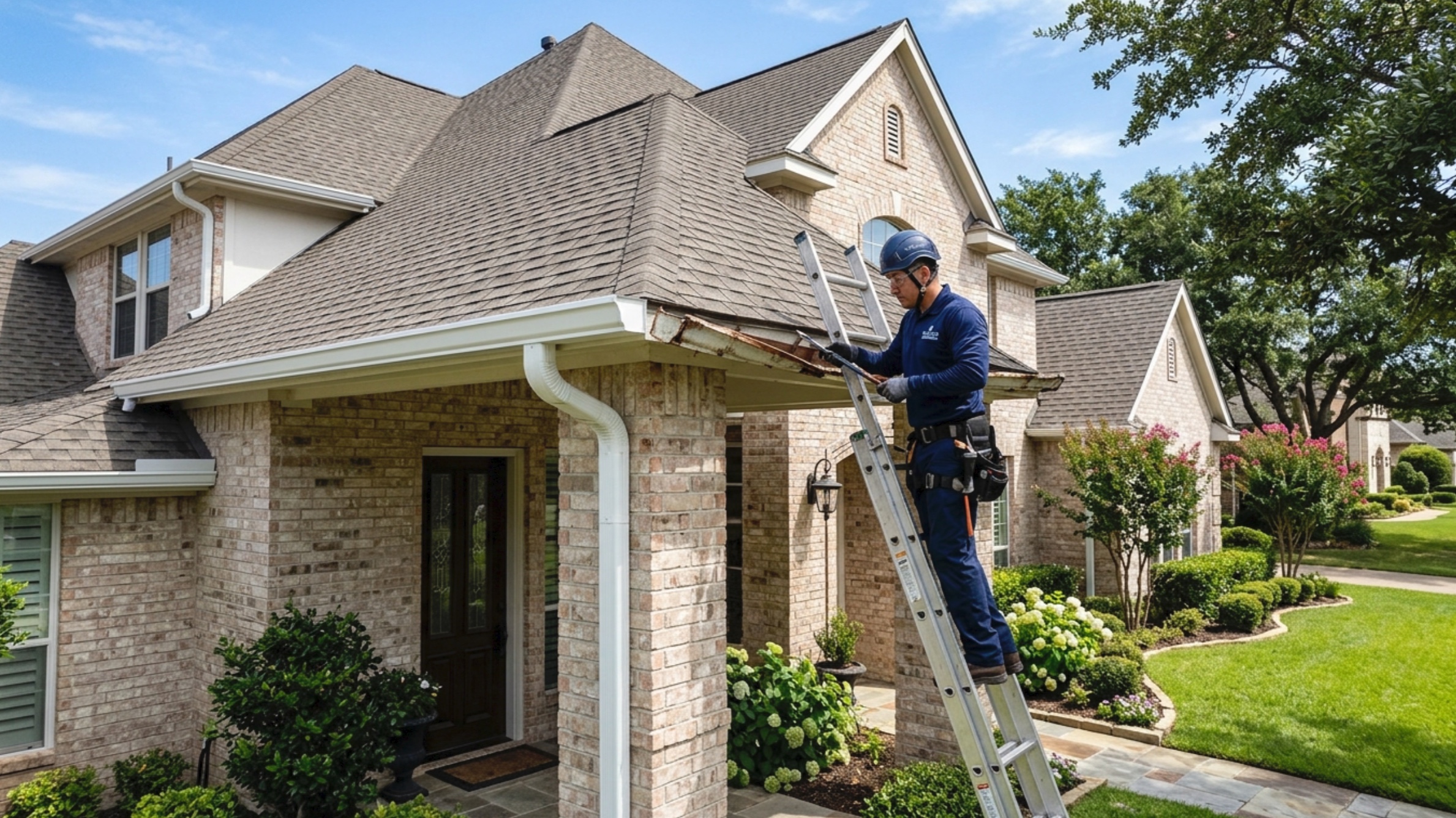
Professional Gutter Installation: Process, DIY Risks, and Choosing an Installer

A gutter system may look simple from the ground, but installing one correctly requires careful measurements, proper slope, secure fastening, correctly sized downspouts, and a clear plan for moving rainwater away from the home.

Incorrect gutter installation can lead to overflowing water, leaking seams, damaged fascia, soil erosion, and foundation problems. That is why many homeowners searching for gutter installation near me choose to hire a specialist instead of treating the project as a basic weekend repair.

The Brothers that just do Gutters of North Dallas provides professional gutter installation throughout Richardson, Plano, Dallas, Allen, Frisco, McKinney, Carrollton, Prosper, The Colony, and surrounding North Texas communities.

Our local team provides free on-site inspections and estimates. Call (469) 846-9166 to schedule your appointment.

What Is Professional Gutter Installation?

Professional gutter installation is the process of designing and installing a complete rainwater management system for a specific property.

It involves more than attaching pieces of metal to the roofline. A qualified gutter installer must account for:

  • Roof size
  • Roof pitch
  • Roof valleys
  • Number of stories
  • Gutter size
  • Downspout size
  • Downspout placement
  • Fascia condition
  • Water flow
  • Drainage around the foundation
  • Tree coverage
  • Property accessibility
  • Material selection
  • Local rainfall

A professional gutter installation contractor should design the system around the home instead of forcing the same setup onto every property.

The purpose of the system is to collect rainwater from the roof, move it through the gutters and downspouts, and discharge it somewhere that will not damage the home.

How to Install Gutters on a House

Homeowners researching how to install gutters, how to install gutter systems, or how to install gutters on a house will usually find a simplified process that looks something like this:

  1. Measure the roofline.
  2. Select the gutter material and size.
  3. Determine the high and low points.
  4. Mark the proper gutter slope.
  5. Install hangers.
  6. Cut or form the gutter sections.
  7. Install outlets and end caps.
  8. Attach the gutters to the fascia.
  9. Install downspouts.
  10. Seal joints and corners.
  11. Test the system with water.

Those steps are technically correct, but each contains opportunities for costly mistakes.

For example, simply knowing that gutters need a slight slope does not tell you:

  • How much slope is appropriate
  • Where the high point should begin
  • How long the run can be before adding another downspout
  • How roof valleys affect water volume
  • How far apart hangers should be placed
  • Whether the fascia can support the system
  • Whether 5-inch or 6-inch gutters are needed
  • Where discharged water should go

A reliable house gutter installation requires planning the entire path of the water, not just mounting the gutter.

The Professional Gutter Installation Process

The installation process may vary based on the property, but most professional gutter installations follow several key stages.

1. Initial Consultation

The process usually begins when a homeowner contacts a gutter installation company by phone or through an online form.

A representative gathers basic information, including:

  • Property address
  • Primary concerns
  • Existing gutter condition
  • Areas where water overflows
  • Whether the home has gutters
  • Preferred appointment time

The Brothers that just do Gutters of North Dallas offers free inspections and estimates.

A local Solutionist® can often visit within a few days, although availability may occasionally extend to approximately one week.

2. On-Site Evaluation

During the evaluation, the representative walks the property with the homeowner and listens to the problems they have noticed.

Common concerns include:

  • Water cascading off the roof
  • Gutters overflowing
  • Water pooling near the foundation
  • Sagging gutter sections
  • Leaking corners
  • Downspouts that discharge too close to the home
  • Missing gutters
  • Gutters pulling away from the fascia

The evaluation is conducted from the ground. The representative considers the roofline, pitch, height, access, drainage, and visible condition of the existing system.

3. Measuring the Roofline

The installer must determine how many linear feet of guttering the property needs.

Measurements may include:

  • Straight roof edges
  • Inside corners
  • Outside corners
  • Roof valleys
  • Attached garages
  • Covered patios
  • Additions
  • Multiple elevations
  • Downspout runs

A simple rectangular home may be easier to measure and install than a property with dormers, complex rooflines, and several levels.

4. Selecting Gutter Size

The most common residential gutter sizes are 5-inch and 6-inch systems. Some larger homes may need 7-inch gutters.

Five-inch gutters may be sufficient for many standard homes.

Six-inch gutters are often recommended when the home has:

  • A large roof
  • A steep roof pitch
  • Long gutter runs
  • Large roof valleys
  • Heavy water concentration
  • Previous overflow problems

A steep roof sends water toward the gutter with more speed and force. A larger gutter can provide additional capacity.

Seven-inch gutters may be recommended when a six-inch system is not large enough for the roof area or water volume.

5. Selecting the Material and Style

Aluminum is one of the most common materials used for residential gutter installation because it is:

  • Rust-resistant
  • Lightweight
  • Durable
  • Available in many colors
  • Suitable for seamless fabrication
  • Cost-effective compared with premium metals

The Brothers that just do Gutters of North Dallas commonly install K-style aluminum and half-round aluminum systems.

Other options may include:

  • Copper
  • Galvanized steel
  • Galvalume
  • Specialty metals
  • Decorative gutter systems

Material selection affects appearance, durability, availability, maintenance, and the cost to install gutters.

6. Evaluating the Fascia

The fascia board is the surface where most gutter systems are secured.

Before new gutter installation begins, the installer should determine whether the fascia is:

  • Solid
  • Properly aligned
  • Free from rot
  • Strong enough to hold fasteners
  • Damaged by previous leaks
  • Suitable for the selected hanger system

New gutters should not be attached to severely deteriorated wood.

If the fascia is damaged, repairs may be necessary before the new system can be installed securely.

7. Designing the Gutter Slope

Gutters should not be perfectly level.

They require a controlled slope that directs water toward the outlets and downspouts. If the slope is too flat, water may remain in the gutter. If it is too steep, the system may look uneven and water may rush past an outlet.

The slope should be planned based on:

  • Length of the gutter run
  • Downspout location
  • Roof shape
  • Water volume
  • Number of outlets

This is one of the most important parts of roof gutter installation.

8. Fabricating Seamless Gutters

Seamless aluminum gutters are typically formed on-site using a gutter machine.

The material is fed through the machine and shaped into a continuous gutter section measured for the home.

Fewer seams may mean fewer potential leak points.

Corners, outlets, and end caps still require careful cutting and sealing, but long gutter runs can often be installed as single pieces.

9. Installing Hangers and Fasteners

Hangers secure the gutter to the house.

Common systems include hidden hangers that attach inside the gutter and screw into the fascia.

Proper hanger spacing matters. If the hangers are too far apart, the gutter may sag, especially when filled with water or debris.

The installer must also make sure fasteners enter solid material rather than damaged wood or weak areas.

10. Installing Downspouts

Downspouts move water from the gutter to the ground.

The system should include enough downspouts to handle the roof’s water volume. Their placement should also avoid:

  • Entrances
  • Walkways
  • Electrical equipment
  • HVAC units
  • Areas with poor drainage
  • Foundation corners
  • Landscaping that traps water

Downspout extensions or underground drainage may be needed to move water farther away from the home.

11. Sealing and Testing the System

The installer seals necessary joints, outlets, corners, and end caps.

The completed system should then be inspected and, when appropriate, tested to confirm that water moves toward the downspouts without standing in the gutters or leaking at connections.

What Is Included in Professional Gutter Installation?

A complete gutter installation service may include:

  • Property evaluation
  • Roofline measurements
  • System design
  • Gutter size recommendations
  • Material recommendations
  • Seamless gutter fabrication
  • Gutter installation
  • Hidden hangers and fasteners
  • Downspout installation
  • Elbows and outlets
  • End caps
  • Corners and miters
  • Sealing
  • Existing gutter removal
  • Material disposal
  • Property cleanup
  • Final inspection
  • Warranty coverage

Additional work may include:

  • Fascia repair
  • Gutter guards
  • Downspout extensions
  • Underground drainage
  • Specialty materials
  • Custom colors
  • Commercial gutter installation

Ask each gutter installation company to explain exactly what is included in the estimate.

DIY Gutter Installation vs. Professional Gutter Installation

DIY gutter installation may seem like a way to reduce labor costs, especially for a small, one-story home.

However, installing gutters yourself involves more than buying materials and following a gutter installation diagram.

A homeowner must be able to:

  • Work safely from ladders
  • Measure accurately
  • Handle long gutter sections
  • Calculate slope
  • Locate solid fastening points
  • Cut metal correctly
  • Seal joints
  • Install outlets
  • Position downspouts
  • Evaluate drainage
  • Protect landscaping
  • Work around roof edges

The risks increase on two-story homes, steep roofs, uneven ground, and properties with limited ladder access.

Common DIY Gutter Installation Risks

Ladder Injuries

Gutter installation requires repeated movement up and down ladders while carrying tools and materials.

A long gutter section may be difficult for one person to control, especially in wind.

Incorrect Measurements

A small measuring error can leave a gutter section too short, cause poor corner alignment, or place an outlet in the wrong location.

Poor Gutter Slope

Incorrect slope may cause standing water, overflow, or uneven-looking gutters.

Improper Hanger Spacing

Too few hangers can lead to sagging and separation from the fascia.

Damage to the Fascia

Using the wrong fasteners or attaching gutters to rotted wood can weaken the system.

Too Few Downspouts

A gutter may be installed correctly but still overflow if it does not have enough outlets and downspouts.

Poor Drainage Planning

A downspout that empties directly beside the foundation may simply move the water problem from the roofline to the ground.

Leaking Seams

Improperly cut or sealed joints may begin leaking soon after installation.

Voided Product Coverage

Some manufacturer warranties may depend on professional installation or specific installation methods.

Common Incorrect Gutter Installation Problems

Incorrect gutter installation may not become obvious until the next major storm.

Watch for these warning signs:

  • Water standing in the gutter
  • Overflow during moderate rain
  • Water leaking behind the gutter
  • Sagging sections
  • Uneven gutter lines
  • Loose hangers
  • Gutters pulling away from the house
  • Dripping corners
  • Water missing the gutter
  • Downspouts backing up
  • Water pooling around the foundation
  • Fascia discoloration
  • Soil erosion

These problems can occur when the gutter is too small, improperly pitched, poorly fastened, or connected to inadequate downspouts.

Why Incorrect Gutter Installation Can Damage a Home

A gutter system controls a large amount of water.

When the system fails, water may soak the fascia and the wood behind it. Over time, this may contribute to fascia rot or roof rafter damage.

Overflowing water may also land repeatedly in the same area beside the house, creating a trench or low area around the foundation.

That uncontrolled water may contribute to:

  • Soil erosion
  • Foundation instability
  • Landscape damage
  • Siding stains
  • Mold growth
  • Crawlspace moisture
  • Basement water
  • Pest activity

The cost of correcting incorrect gutter installation may be higher than hiring a qualified installer from the beginning.

How Much Does It Cost to Install Gutters?

The cost of gutter installation depends on the property and the system selected.

Important pricing factors include:

  • Linear footage
  • Number of stories
  • Roof pitch
  • Roof access
  • Material
  • Gutter size
  • Downspout quantity
  • Roofline complexity
  • Existing gutter removal
  • Fascia repairs
  • Gutter guards
  • Drainage improvements
  • Specialty materials

The Brothers that just do Gutters of North Dallas does not publish a generic average cost of gutter installation because a reliable quote requires an on-site evaluation.

A simple one-story home and a large multi-story property may need similar linear footage but have very different labor and access requirements.

The company provides free inspections and estimates so homeowners receive a gutter installation price based on the actual property.

How Long Does New Gutter Installation Take?

After an estimate is approved, a 50% deposit secures the project’s position on the work schedule.

The Brothers that just do Gutters of North Dallas generally provide a one- to two-week scheduling window.

Standard materials may be available within one or two days. Specialty products, including copper, may require more time.

The amount of time spent at the property depends on:

  • Project size
  • Number of stories
  • Roof access
  • Material
  • Removal requirements
  • Fascia repairs
  • Weather
  • Gutter guard installation
  • Drainage work

How to Choose the Right Gutter Installer

When searching for the best gutter installation near me, do not compare companies based only on price.

Use the following criteria to evaluate gutter installers.

Choose a Gutter Specialist

Some handymen, roofers, landscapers, and general contractors install gutters as an additional service.

A dedicated gutter installation contractor works with gutter sizing, water flow, downspout placement, and drainage problems every day.

The Brothers that just do Gutters focuses specifically on gutter systems.

Ask About Employees and Subcontractors

Find out who will perform the work.

Ask whether the crew is:

  • Internally trained
  • Insured
  • Experienced
  • Supervised
  • Familiar with the selected product

Review the Inspection Process

A reliable gutter installer should inspect the property before recommending a system.

Be cautious of a gutter installation service that provides a final quote without reviewing the roofline, height, access, and drainage.

Ask What the Estimate Includes

Make sure the quote explains:

  • Material
  • Gutter size
  • Linear footage
  • Downspouts
  • Removal
  • Cleanup
  • Fascia repairs
  • Gutter guards
  • Warranty
  • Payment schedule

Ask About Warranties

The Brothers that just do Gutters offer qualifying installations a 10-year material warranty and a 5-year labor warranty.

Repairs are handled differently and may not include the same warranty coverage.

Ask the Solutionist® to explain the warranty that applies to your specific project.

Read Reviews

Reviews can provide information about:

  • Communication
  • Scheduling
  • Cleanliness
  • Workmanship
  • Problem resolution
  • Professionalism
  • Follow-up service

The Brothers that just do Gutters publishes both positive and negative reviews as part of its commitment to transparency and accountability.

Compare Complete Solutions

The lowest estimate is not always the best value.

A lower quote may exclude:

  • Adequate downspouts
  • Proper hanger spacing
  • Removal and disposal
  • Fascia evaluation
  • Cleanup
  • Warranty coverage
  • Drainage planning

Compare what the system will do for the home, not only how much the initial installation costs.

Local Gutter Installation in North Dallas

The Brothers that just do Gutters of North Dallas provides residential gutter installation in communities including:

  • Dallas
  • North Dallas
  • Richardson
  • Plano
  • Allen
  • Frisco
  • McKinney
  • Carrollton
  • Prosper
  • The Colony
  • Highland Park
  • Lakewood
  • Murphy
  • Parker
  • Flower Mound

Homeowners searching for gutter installation Dallas TX, gutter installation Plano TX, gutter installers Plano TX, gutter installation Richardson TX, or a gutter installer near me can contact the local team for a free evaluation.

Service availability may vary by ZIP code, so contact the company to confirm your location.

Questions to Ask a Gutter Installation Company

Before hiring a contractor, ask:

  • Do you specialize in gutters?
  • Is the estimate free?
  • Will you inspect the property in person?
  • What gutter size do you recommend and why?
  • How many downspouts are included?
  • Are the gutters seamless?
  • What material will be used?
  • How will the gutters be attached?
  • Is old gutter removal included?
  • Is cleanup included?
  • Do you repair fascia?
  • Do you offer gutter guards?
  • Do you provide drainage solutions?
  • Are your installers insured?
  • Do you use subcontractors?
  • What warranties are included?
  • How soon can the project be scheduled?
  • Is financing available?
  • What deposit is required?

Clear answers will help you compare local gutter installers more accurately.

Schedule Professional Gutter Installation

A properly installed gutter system helps protect the roofline, fascia, landscaping, siding, and foundation.

The Brothers that just do Gutters of North Dallas provides free on-site inspections, custom system recommendations, premium materials, and professional installation.

Call (469) 846-9166 to schedule your free estimate.

Conclusion

Professional gutter installation involves much more than attaching metal to the edge of a roof.

The installer must measure the roofline, choose the correct gutter size, calculate slope, place downspouts, inspect the fascia, plan drainage, and secure the complete system.

DIY gutter installation may be possible for some simple one-story properties, but it comes with safety risks and many opportunities for error. Incorrect gutter installation can cause standing water, leaks, overflow, fascia rot, erosion, and foundation problems.

Choosing an experienced gutter installation company gives you a system designed around your home and its water-management needs.

For professional gutter installation in North Dallas, call The Brothers that just do Gutters at (469) 846-9166 and request a free inspection and estimate.

Frequently Asked Questions

How do professionals install gutters?

Professionals inspect the property, measure the roofline, choose the proper gutter size and material, plan the slope, fabricate the gutter sections, install hangers, add downspouts, seal joints, and inspect the completed system.

Can I install gutters myself?

DIY gutter installation is possible, but it requires accurate measurements, ladder safety, slope calculations, metal cutting, fastening, sealing, and drainage planning. Multi-story and steep-roof installations should generally be left to trained professionals.

What is the biggest risk of DIY gutter installation?

The immediate risk is a ladder-related injury. Long-term risks include improper slope, weak fastening, leaks, undersized gutters, inadequate downspouts, and water damage.

What causes incorrect gutter installation?

Common causes include poor measurements, inadequate slope, incorrect hanger spacing, too few downspouts, attachment to damaged fascia, undersized gutters, and poor drainage planning.

How much does it cost to install gutters?

The cost to install gutters depends on linear footage, material, number of stories, roof pitch, access, gutter size, downspouts, roofline complexity, removal, and additional repairs. A property inspection is required for an accurate estimate.

Do The Brothers that just do Gutters offer free estimates?

Yes. The Brothers that just do Gutters of North Dallas offers free on-site inspections and estimates.

How soon can I schedule gutter installation?

Estimate appointments may often be available within a few days. Once approved, projects are generally given a one- to two-week scheduling window, depending on weather, workload, and materials.

Is a deposit required?

Yes. A 50% deposit is required after the estimate is approved to place the project on the work schedule.

What material is best for residential gutters?

Aluminum is one of the most common residential materials because it is rust-resistant, lightweight, durable, and available in many colors. Copper and other specialty materials are also available.

Are seamless gutters better?

Seamless gutters have fewer joints along long runs, which reduces the number of potential leak points. Corners, outlets, and end caps must still be installed and sealed correctly.

Should I choose 5-inch or 6-inch gutters?

The proper size depends on the roof area, pitch, valleys, gutter run length, and local rainfall. Larger and steeper roofs often benefit from 6-inch gutters.

When are 7-inch gutters needed?

Seven-inch gutters may be recommended for very large roofs or properties where a 6-inch system cannot handle the water volume.

How many downspouts does my house need?

The number depends on the roof area, gutter length, gutter size, rainfall, and water concentration. A professional installer should calculate the necessary capacity.

Can new gutters be installed over damaged fascia?

Severely damaged or rotted fascia should be repaired before installation. Gutters need a solid attachment surface.

What is included in professional gutter installation?

A complete service may include inspection, measurements, system design, fabrication, gutters, hangers, outlets, downspouts, sealing, removal, cleanup, and warranty coverage.

Do professional installers remove old gutters?

Many gutter installation services include removal and disposal, but homeowners should confirm this in the written estimate.

Are gutter guards installed at the same time?

Yes. Gutter guards may be added during new installation. The Brothers that just do Gutters offer BroGuard micro-mesh gutter protection.

Does professional gutter installation include drainage work?

Basic installation includes downspouts, but extensions, underground drainage, or additional water-management work may be separate services.

Do you install gutters on commercial properties?

Yes. The Brothers that just do Gutters serves residential properties, businesses, HOAs, apartments, and other multifamily properties.

Do new gutters include a warranty?

Qualifying installations may include a 10-year material warranty and a 5-year labor warranty. Ask your Solutionist® to confirm the coverage for your project.

Do The Brothers that just do Gutters offer financing?

Yes. Financing options may be available to qualified homeowners through third-party providers.

How do I find the best gutter installer near me?

Look for a gutter specialist with an in-person inspection process, trained and insured installers, clear estimates, strong reviews, warranty coverage, and experience designing complete drainage systems.

How do I schedule an installation estimate?

Call The Brothers that just do Gutters of North Dallas at (469) 846-9166 or submit the online estimate request form.