

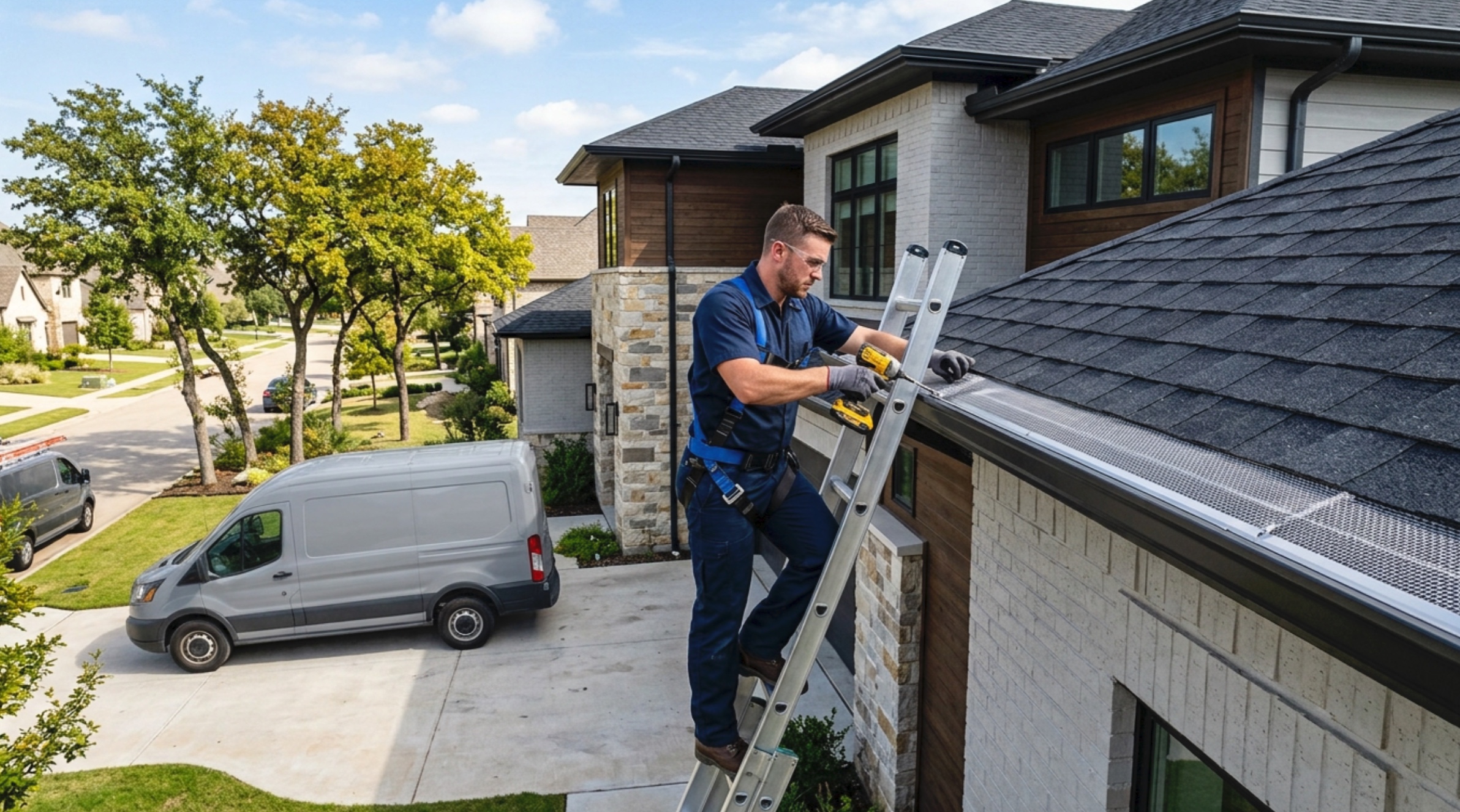
Gutters should remain securely attached to the roofline while directing rainwater toward the downspouts. When a gutter begins sagging, shifting, or separating from the house, the system may no longer have the proper slope or support needed to control water.
Homeowners often notice a widening gap between the gutter and fascia, sections hanging lower than the rest of the system, or water spilling behind the gutters during storms. These are not only appearance problems. Loose gutters can allow water to damage the fascia, roof edge, siding, landscaping, and foundation.
If you are asking, “Why are my gutters pulling away from my house?”, the answer may involve failed hangers, damaged fascia, trapped debris, standing water, poor installation, or an undersized system.
The Brothers that just do Gutters of North Dallas provides free on-site gutter inspections and estimates. Our gutter specialists evaluate why the system is failing and explain whether it can be reattached, repaired, or should be replaced.
Call (469) 658-4228 to schedule your free inspection.
What Do Sagging, Loose, and Pulling-Away Gutters Mean?
These terms describe related problems, but they are not always exactly the same.
Sagging Gutters
Sagging gutters dip lower in one or more areas.
The gutter may bow between hangers, lean forward, or form a low spot where water collects. A sag can affect the system’s slope and prevent water from reaching the downspouts.
Loose Gutters
Loose gutters are no longer secured firmly to the house.
The gutter may move when touched, shake during wind, or have hangers and fasteners that are beginning to separate from the fascia.
Gutters Pulling Away From the House
Gutters pulling away from the house create a visible gap between the back of the gutter and the fascia board.
This may allow roof runoff to flow behind the system rather than into it. The weight of the loose gutter can also pull additional hangers free and damage the fascia.
These symptoms frequently occur together. A loose section may begin pulling away, which changes its slope and causes it to sag.
Why Are My Gutters Pulling Away From My House?
A gutter system usually pulls away because the connection between the gutter and the house can no longer support the load.
Common causes include:
- Loose or failed hangers
- Fasteners pulling out of the fascia
- Rotted fascia boards
- Gutters filled with debris
- Standing water
- Poor gutter slope
- Insufficient hanger spacing
- Incorrect fasteners
- Ice or snow weight
- Storm damage
- Falling tree limbs
- Ladders placed against the gutter
- Gutters that are too small
- Too few downspouts
- Poor original installation
- Aging materials
Identifying the underlying cause matters. Simply pushing the gutter back into place will not provide a lasting repair if the fascia is rotted or the system continually fills with standing water.
What Causes Sagging Gutters?
Sagging usually occurs when a section of gutter carries more weight than its support system can handle.
Debris Buildup
Leaves, twigs, dirt, seeds, pollen, and roof granules can collect inside the gutter.
When this material becomes wet, it grows significantly heavier. That weight places additional pressure on the hangers and fascia.
Debris may also block the downspouts, causing the gutter to fill with water during a storm.
A long gutter run filled with water and wet material can become heavy enough to bend, sag, or detach from the house.
Standing Water
A properly installed gutter should slope gradually toward an outlet and downspout.
If the slope is incorrect, water may remain inside the system after the rain stops. This standing water adds ongoing weight and pressure.
Standing water may be caused by:
- Poor installation
- A shifted gutter run
- Failed hangers
- A low spot
- A clogged downspout
- An outlet positioned too high
- Structural movement
- Gutter sections bending over time
A sag can create standing water, and standing water can make the sag worse. This cycle continues until the system is repaired or replaced.
Hangers Spaced Too Far Apart
Gutter hangers provide support along each run.
When hangers are spaced too far apart, the gutter material must carry more weight between support points. This can cause the gutter to bow in the middle.
The appropriate spacing depends on the gutter material, system design, roof conditions, and expected load.
Adding hangers may help in some situations, but only when the gutter and fascia remain in suitable condition.
Damaged or Missing Hangers
Individual hangers may loosen, bend, break, or separate from the fascia.
When one hanger fails, nearby hangers must carry additional weight. That can lead to a larger section becoming loose.
Replacing one or more hangers may correct an isolated problem, but repeated hanger failure may indicate a larger issue with the fascia, slope, or overall gutter design.
Weak or Rotted Fascia
The fascia board is the wood surface behind the gutter.
Even a strong hanger cannot support the gutter if its fastener is driven into soft or rotted wood.
Fascia damage may be caused by:
- Water leaking behind the gutter
- Overflow
- Roof leaks
- Missing or incorrect drip edge
- Failed paint or protective coating
- Long-term moisture exposure
- Previous installation damage
When the fascia deteriorates, fasteners may pull out and leave visible holes. The gutter then begins separating from the home.
In these cases, the damaged fascia may need repair before the gutter can be securely reattached.
Incorrect Gutter Pitch
A gutter that does not slope correctly may hold water in the middle or at the wrong end.
The added weight can cause hangers to loosen and the gutter to sag.
Correcting the pitch may require:
- Removing or loosening hangers
- Establishing the proper high point
- Repositioning the gutter
- Installing new hangers
- Testing the water flow
If the gutter is already bent or permanently deformed, repositioning it may not be enough.
What Causes Loose Gutters?
Loose gutters often begin with a small attachment problem and become worse over time.
Fasteners Pulling Out
Hidden hangers and other gutter supports typically use screws or fasteners that attach to the fascia.
Fasteners may loosen because of:
- Rotten wood
- Improper installation
- Short or incorrect screws
- Repeated movement
- Excessive gutter weight
- Wind
- Material expansion and contraction
- Previous holes that no longer hold securely
Driving another screw into the same damaged hole may not provide a dependable repair. A contractor may need to use a new fastening point or repair the underlying wood.
Improper Original Installation
Incorrect gutter installation may involve:
- Too few hangers
- Poor hanger spacing
- Incorrect screws
- Attachment to weak fascia
- Poor slope
- Inadequate downspouts
- Gutters mounted too low
- Improper alignment beneath the roof edge
A system may appear acceptable when first installed but begin loosening after repeated storms.
When several installation mistakes affect the same system, complete replacement may be more practical than repairing each problem separately.
Wind and Storm Damage
Strong winds can place pressure on a loose gutter edge.
Storm damage may also involve:
- Falling branches
- Hail
- Windblown debris
- Water overwhelming the system
- Damage from nearby roof materials
A partially loose gutter should be repaired before another storm worsens the separation.
Ladders Leaning Against Gutters
Gutters are not designed to support the weight of a ladder and a person.
Leaning a ladder directly against the front lip can:
- Bend the gutter
- Damage the finish
- Loosen hangers
- Change the slope
- Cause separation from the fascia
Use appropriate ladder stabilizers and safe access methods when performing exterior maintenance.
Professional service is generally safer for two-story properties, steep roofs, and difficult-to-reach sections.
Are Sagging Gutters Dangerous?
A sagging gutter may eventually detach from the house.
A falling section of metal can damage:
- Windows
- Siding
- Landscaping
- Vehicles
- Outdoor furniture
- People or pets below
The water-management consequences can also be serious.
When a gutter sags, water may collect in the low point and overflow. That water may then soak the fascia or fall beside the foundation.
A visibly loose or severely sagging gutter should be inspected promptly.
The Brothers that just do Gutters of North Dallas does not offer emergency gutter services. If a gutter is actively falling or creating an immediate hazard, keep people away from the area and contact an appropriate urgent exterior repair provider.
How Loose Gutters Damage the Fascia
Loose gutters can both result from fascia damage and make that damage worse.
As the gutter separates, water may flow through the growing gap and soak the wood behind it.
Repeated exposure can cause:
- Soft or spongy wood
- Dark staining
- Peeling paint
- Mold
- Rot
- Failed fasteners
- Damage to the roof edge
- Damage to nearby rafters
Reattaching a gutter without addressing deteriorated fascia may only provide a temporary result.
The Brothers that just do Gutters provide fascia repair when the wood must be restored before the gutter system can be secured.
Can Sagging Gutters Be Repaired?
Some sagging gutters can be repaired.
Repair may be possible when:
- Damage is limited to one section
- The fascia is solid
- The gutter is not badly bent
- The material is in good condition
- Only a few hangers have failed
- The gutter size is appropriate
- The downspouts provide enough capacity
- The original slope can be restored
Possible repairs include:
- Cleaning out debris
- Clearing downspouts
- Replacing hangers
- Adding support
- Installing new fasteners
- Repositioning the gutter
- Correcting the slope
- Reattaching loose downspouts
- Repairing a limited fascia area
A professional should determine why the gutter sagged before deciding which repair is appropriate.
How Are Gutters Reattached to a House?
The specific process depends on the system, but a professional repair may involve the following steps.
1. Remove Excess Weight
The gutter and downspouts should be cleared of debris and standing water.
This allows the contractor to evaluate the system without the added load.
2. Inspect the Fascia
The attachment surface must be checked for rot, cracks, old fastener holes, and water damage.
Damaged fascia may require repair or replacement.
3. Evaluate the Gutter
The contractor determines whether the gutter is bent, twisted, rusted, or otherwise too damaged to reuse.
4. Check the Slope
The proper high and low points are established so water can move toward the outlets.
5. Replace or Add Hangers
Failed supports may be removed and replaced. Additional hangers may be added when appropriate.
6. Secure the System
The gutter is repositioned and fastened into solid material.
7. Test Water Flow
The completed repair should be checked for proper drainage, standing water, and leakage.
Should You Hammer Loose Gutter Spikes Back In?
Older gutters may use spikes and ferrules rather than modern hidden hangers.
When the spikes begin pulling out, homeowners sometimes hammer them back into the same holes.
This may provide a temporary improvement, but the original holes may be enlarged and unable to hold the spikes securely.
Repeatedly hammering them back may also damage the fascia or gutter.
A more durable repair may involve:
- Replacing spikes with appropriate screws
- Installing modern hidden hangers
- Moving fasteners to solid attachment points
- Repairing damaged fascia
- Replacing the affected gutter run
The correct option depends on the existing material and condition.
When Loose Gutters Should Be Replaced
Replacement may make more sense when:
- Several gutter runs are pulling away
- The system is extensively bent
- The gutters are rusted or corroded
- Numerous hangers have failed
- The gutters are too small for the roof
- Downspout capacity is inadequate
- The original installation is poor throughout
- The slope cannot be restored
- The material is cracked or weakened
- Repairs have repeatedly failed
- The fascia is damaged along large sections
- Water continues overflowing after cleaning
In many cases, the best solution for a gutter system that does not work is to remove it and install a properly sized system with new hangers, downspouts, and correct slope.
How Gutter Size Contributes to Sagging
An undersized gutter may overflow frequently during heavy rain.
Large roofs, long gutter runs, and steep pitches can send significant water into the system quickly.
Five-inch gutters may be suitable for many homes, but six-inch gutters are often recommended for:
- Larger roofs
- Steep roof slopes
- Long runs
- Large roof valleys
- Homes with recurring overflow
Some very large homes may require 7-inch gutters.
A gutter that is too small may remain overloaded during storms. The added water weight and overflow can contribute to loose hangers, fascia damage, and sagging.
How Downspouts Affect Loose Gutters
Downspouts allow collected water to leave the gutter.
When a downspout is clogged or the system has too few downspouts, water may back up and fill the gutter.
A full gutter places substantial weight on the hangers.
Downspout-related problems include:
- Debris blockages
- Small outlets
- Too few downspouts
- Crushed sections
- Separated elbows
- Underground drainage clogs
- Poorly placed outlets
Repairing loose gutters without correcting inadequate drainage may allow the problem to return.
How Gutter Cleaning Helps Prevent Sagging
Regular cleaning removes the wet debris that adds weight and blocks water flow.
The Brothers that just do Gutters of North Dallas generally recommends professional gutter maintenance approximately twice per year, depending on the property.
Homes with heavy tree coverage may need more frequent service.
Professional gutter cleaning may include:
- Full gutter cleaning
- Downspout cleaning
- System inspection
- Before-and-after photographs
- Property cleanup
- Repair recommendations
Cleaning services begin at a $450 minimum because the company provides a comprehensive gutter service rather than basic debris removal.
Can Gutter Guards Prevent Loose Gutters?
Gutter guards can help reduce the amount of debris entering the system.
This may lower the risk of clogs, standing water, and heavy wet debris contributing to gutter sag.
However, gutter guards do not correct:
- Rotted fascia
- Incorrect slope
- Loose fasteners
- Undersized gutters
- Too few downspouts
- Existing installation defects
The underlying gutter system should be functional before guards are installed.
The Brothers that just do Gutters offers BroGuard, a gutter protection system built with a heavy-gauge aluminum frame and stainless steel micro mesh.
A free inspection can determine whether the existing gutters are suitable for guards or need repairs first.
DIY Repair vs. Professional Gutter Repair
A homeowner may be able to clear a low, accessible gutter or identify an obviously loose component.
However, safely reattaching and realigning gutters often requires:
- Ladder work
- Accurate measurements
- Correct slope
- Proper fasteners
- Evaluation of the fascia
- Handling long gutter sections
- Working near roof edges
- Testing water flow
DIY repairs may fail when the homeowner addresses the visible symptom but not the root cause.
For example:
- Adding a hanger will not fix rotted fascia.
- Resealing a gap will not fix an incorrect slope.
- Reattaching a gutter will not solve an undersized system.
- Cleaning debris will not correct too few downspouts.
Professional evaluation is especially important for multi-story homes, steep roofs, widespread damage, or systems that repeatedly pull away.
How Much Does Sagging or Loose Gutter Repair Cost?
The cost depends on:
- Length of the affected area
- Number of failed hangers
- Fascia condition
- Number of stories
- Roof pitch
- Property access
- Gutter material
- Whether the gutter is bent
- Downspout condition
- Whether replacement is required
The Brothers that just do Gutters of North Dallas do not publish a universal repair price because the appropriate solution depends on the property.
Free on-site inspections and estimates are available.
Gutter repairs do not include the same warranty coverage as qualifying full installations or replacements.
What Happens During a Gutter Inspection?
A local Solutionist® walks the property with the homeowner and listens to the concerns they have noticed.
The evaluation may consider:
- Visible gutter separation
- Sagging areas
- Hanger condition
- Fascia condition
- Roof pitch
- Number of stories
- Property access
- Gutter size
- Downspout placement
- Overflow patterns
- Water pooling near the foundation
- Existing installation quality
The initial estimate is performed from the ground rather than by climbing ladders.
The company then provides its professional opinion and, when requested, a quote for the recommended work.
Repair or Replacement: How Is the Decision Made?
The decision is situational.
A limited repair may be appropriate when the system is otherwise in good condition and the problem affects only a small area.
Replacement may be better when the gutters are poorly installed, repeatedly failing, extensively damaged, or unable to handle the roof’s water volume.
The goal should be to provide a dependable water-management system rather than the least expensive temporary patch.
Why Choose The Brothers that just do Gutters?
The Brothers that just do Gutters of North Dallas specializes in gutter systems.
Services include:
- Loose gutter repair
- Sagging gutter repair
- Gutter reattachment
- Downspout repair
- Fascia repair
- Gutter cleaning
- Recurring maintenance
- Gutter replacement
- Seamless gutter installation
- Gutter guards
- Underground drainage
- Residential gutter services
- Commercial gutter services
- HOA and multifamily gutter services
The company focuses on professional communication, transparent recommendations, quality workmanship, and premium customer service.
Service areas include Plano, Richardson, Dallas, Allen, Carrollton, Highland Park, Lakewood, Murphy, Parker, Flower Mound, The Colony, and surrounding North Dallas communities.
Schedule Your Free Gutter Inspection
Loose or sagging gutters rarely improve on their own.
The longer a system remains separated from the house, the greater the risk of water leaking behind it, damaging the fascia, and eroding the soil around the foundation.
The Brothers that just do Gutters of North Dallas will inspect the system and explain whether it can be reattached, repaired, or should be replaced.
Call (469) 658-4228 or complete the online form to schedule your free inspection and estimate.
Conclusion
Gutters pulling away from a house are usually a sign that the system has become overloaded, lost support, or is attached to damaged fascia.
Common causes include clogged gutters, standing water, failed hangers, incorrect slope, poor installation, storm damage, and inadequate downspouts.
Some loose gutters can be repaired by cleaning the system, replacing hangers, restoring the proper slope, and securing the gutter to solid fascia.
Replacement may be the better option when the material is badly bent, rusted, undersized, incorrectly installed, or failing throughout multiple areas.
Do not ignore a visible gap between the gutter and your home. Water can run behind the system and damage the fascia, roof edge, and nearby structural materials.
Call The Brothers that just do Gutters of North Dallas at (469) 658-4228 to request your free inspection and estimate.
Frequently Asked Questions
Why are my gutters pulling away from my house?
Common causes include failed hangers, loose fasteners, rotted fascia, debris buildup, standing water, improper slope, poor installation, and gutters that are overloaded or undersized.
What causes sagging gutters?
Sagging may be caused by wet debris, blocked downspouts, standing water, insufficient hanger spacing, damaged hangers, incorrect pitch, or weakened gutter material.
Why are my gutters loose?
Fasteners may have pulled out of the fascia, hangers may have failed, or the wood behind the gutter may be damaged. Excess weight and improper installation can also loosen the system.
Can loose gutters be repaired?
Yes, in some cases. Repairs may include replacing hangers, installing new fasteners, correcting the pitch, reattaching the gutter, or repairing damaged fascia.
Can sagging gutters be pushed back into place?
Simply pushing them back usually does not address the cause. The gutter must be cleaned, inspected, repositioned, properly supported, and attached to solid material.
Do sagging gutters always need replacement?
No. A limited sag may be repairable if the gutter and fascia remain in good condition. Widespread bending, rust, incorrect sizing, or repeated failure may justify replacement.
Can clogged gutters cause sagging?
Yes. Wet leaves and standing water add significant weight, which can bend the gutter and pull hangers from the fascia.
Can a clogged downspout make gutters pull away?
Yes. A clogged downspout can cause water to back up and fill the gutter, placing additional weight on the hangers.
How do professionals reattach gutters?
Professionals remove debris, inspect the fascia, check the gutter condition, restore the correct slope, replace or add hangers, secure the gutter, and test water flow.
Can you screw gutters back into the same holes?
Old holes may be enlarged or surrounded by damaged wood. A secure repair may require new attachment points, different fasteners, or fascia repair.
Should old gutter spikes be replaced?
Loose spikes may be replaced with appropriate screws or modern hidden hangers. The correct method depends on the system and fascia condition.
What happens if I ignore loose gutters?
The gutter may continue separating, leak behind the system, damage the fascia, overflow, or eventually fall from the house.
Are loose gutters dangerous?
They can be. A heavily damaged section may detach and fall. Keep people away from visibly unstable gutters and arrange an inspection.
Why is water leaking behind my loose gutter?
The gap may allow roof runoff to reach the fascia instead of entering the gutter. Overflow, poor alignment, or missing drip edge may also contribute.
Does damaged fascia need to be replaced before gutter repair?
Damaged fascia must provide a solid attachment surface. Depending on the extent of deterioration, it may need repair or replacement before the gutter is secured.
Can improper gutter slope make the system loose?
Yes. Incorrect slope can create standing water, which adds weight and puts pressure on the hangers.
Can undersized gutters pull away?
Undersized gutters may fill and overflow more frequently. That repeated water load can contribute to sagging and failed attachments.
Will gutter guards fix sagging gutters?
No. Guards may help reduce debris, but existing slope, hanger, fascia, and sizing problems must be corrected first.
How often should gutters be cleaned to prevent sagging?
The Brothers that just do Gutters generally recommends approximately twice-per-year maintenance, though heavily wooded properties may need more frequent service.
How much does loose gutter repair cost?
Cost depends on the affected length, hanger condition, fascia damage, height, access, and whether replacement is needed. A free on-site estimate provides accurate pricing.
Are gutter repairs covered by a warranty?
Repairs do not receive the same warranty coverage as qualifying full installations or replacements. Ask your Solutionist® about the terms for your project.
Do the Brothers that just do Gutters repair fascia?
Yes. Fascia repair is available when damaged wood affects the gutter system.
Do you offer emergency gutter repair?
No. The company does not provide emergency gutter services.
How do I schedule a gutter inspection?
Call The Brothers that just do Gutters of North Dallas at (469) 658-4228 or submit the online estimate request form.